Ghent after the day-trip crowds
An overnight stay changes the pace of Ghent. Leave room for the riverfront after the busiest sightseeing hours, then use the next morning for streets beyond the familiar central views.
Inside this story
An overnight stay changes Ghent's center of gravity. The familiar waterfront is no longer a view fitted between arriving and departing trains; it becomes a place you can return to after dinner and see again before the next day's activity. That extra time need not produce a longer list of attractions. Its value lies in letting the city acquire continuity, with recognizable streets, an unhurried meal and a second morning that begins already settled.
Ghent's historic buildings are part of a contemporary university city. Bicycles, trams, deliveries and ordinary shopping keep moving around its architecture. A useful visit pays attention to those systems as well as the celebrated façades. Choose a central introduction, one meaningful collection and a neighborhood walk beyond the busiest waterside terraces. Together they offer a more specific impression than repeating the principal photograph from every available bridge.
- The Graslei and Korenlei quays give a useful introduction to the historic center.
- Museum collections offer an alternative to spending every hour outdoors.
- A second morning can focus on one collection rather than repeating the main circuit.
Arrive in the city, not just at the station
Include station-to-center transport in the arrival plan. A railway journey ending in Ghent does not mean you have reached the hotel door or the first sightseeing street. Look at the actual connection, current ticket arrangements and the final walk with luggage. If the room is in a historic building, ask about stairs and access inside as well. These details can matter more on a short visit than a small difference in the room's advertised distance from a landmark.
Store bags before beginning the main walk whenever practical. Moving through narrow or busy streets is easier with a small day bag, and the initial experience feels less like an extended transfer. Use the first outing to learn a route between accommodation, a convenient meal and the central water. A familiar return gives you more freedom later, when the light changes or an interesting street tempts you to remain outside longer than planned.
Do not make the arrival afternoon carry every major attraction. A train delay or a longer check-in can then be absorbed without sacrificing the purpose of the trip. Ghent's advantage for an overnight visitor is the following morning, when you can begin locally. Preserve energy for that opportunity instead of using every available minute to imitate the most crowded version of a day-trip circuit before dinner.
The quays as a place to read architecture
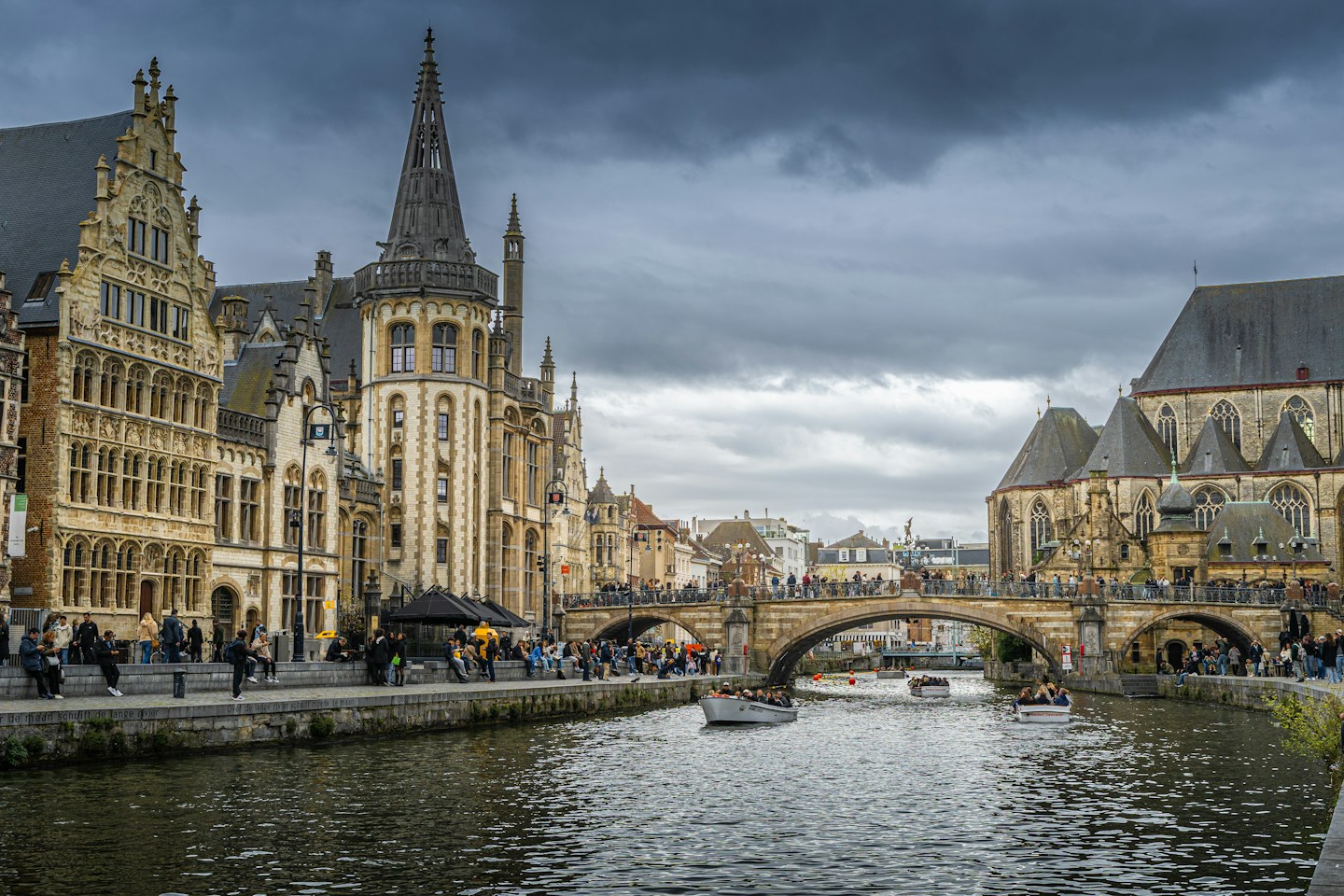
Graslei and Korenlei provide a clear introduction to Ghent's historic center. Look along the water from more than one position and notice how façades form an urban edge rather than isolated monuments. Building widths, rooflines and the relationship between water and street become easier to appreciate when you stop moving for a few minutes. You do not need specialist knowledge to see how varied individual buildings contribute to a recognizable whole.
Find a legitimate place to pause. Bridges and narrow passages are often where the view seems most compelling, but they also carry people trying to cross. Take the photograph, then move to somewhere that allows looking without obstruction. A nearby terrace may offer a longer stay if it suits your plans, but buying something is not a prerequisite for appreciating public space. The essential distinction is between a place designed for stopping and a route needed for movement.
Return at another hour rather than trying to extract every possible impression during one visit. Different activity and changing light can make familiar buildings feel more specific. An evening walk is particularly convenient when the accommodation is nearby and dinner has already provided a natural break. Keep the route short enough to remain pleasant. Repetition works because it allows attention to deepen, not because every return must cover the complete central loop again.
Water helps orientation, but bridges determine routes
Canals and rivers make Ghent visually legible, yet they do not remove practical questions about crossing. A destination directly opposite may require a detour to an available bridge. Inspect the route before assuming that two nearby points fit comfortably between reservations. This matters with luggage, in rain and for anyone who finds prolonged walking difficult. A small amount of map reading can prevent an otherwise attractive connection from becoming a source of fatigue.
Use a few crossings as reference points during the first day. Once you recognize them, the central streets become easier to connect mentally. There is less need to consult a phone at every turn, leaving more attention for the city itself. If companions separate for shopping or a museum, choose an unmistakable meeting place with room to wait instead of a crowded bridge where everyone will need to keep moving.
Waterfront routes are not automatically quiet or pedestrian-only. Look for bicycles, trams and service activity, and obey the street's actual layout rather than its picturesque appearance. Do not stand on a cycle route to arrange a photograph. The city is easier to enjoy when visitors read movement as carefully as architecture. Those everyday flows are also part of what distinguishes Ghent from a preserved historical scene.
Let one collection deepen the visit
A museum or cultural collection can give the second morning a clear purpose. Choose according to a genuine subject interest and confirm current visitor arrangements directly. Ghent offers more than one kind of cultural story, so there is no reason to select solely by proximity to the most familiar waterfront. A focused visit can connect the buildings outside to artistic, social or industrial histories that a general walk only hints at.
Allow enough time for a collection to become an experience rather than a check-in. Read selected interpretation, look carefully at objects that interest you and accept that you may not see everything. For a short stay, concentration is more valuable than coverage. If companions want different amounts of time, agree on a reunion point and leave the next meal flexible. A museum loses much of its value when everyone is hurrying toward an unnecessarily tight departure.
Weather can influence the order without making the collection a mere refuge. If rain is expected, place the indoor visit during the less comfortable period and save a shorter street walk for later. If conditions remain pleasant, retain the planned collection and use the walk as a transition afterward. Culture and outdoor time need not compete. Their combination often makes each more vivid, particularly when the institution has supplied context for what you notice beyond its doors.
Find a quieter table beyond the obvious view
The busiest waterside terraces offer an appealing setting, but they are only one way to eat in Ghent. A neighborhood café or restaurant slightly away from the principal quays can provide a calmer break and another view of local life. Choose based on appetite, menu and convenience rather than assuming that the most photographed location will produce the best meal. A comfortable table can anchor a walk without needing to be an attraction itself.
Give food enough time in the schedule. After hours on foot, sitting down is more restorative than continuously buying small things while moving. Read the menu, ask about unfamiliar preparations and discuss dietary requirements clearly. If dinner matters particularly, make a deliberate choice and verify any reservation needs. Keep the walk afterward nearby, so the meal can settle into the evening instead of becoming a pause before another complicated journey.
A café also helps calibrate the day. The group can decide whether to continue exploring, return to rest or split temporarily according to interests. This is especially useful on a two-day visit, when the desire to make the most of limited time can obscure how tired people feel. Ghent's central scale makes modest adjustments practical. Use that convenience to support a pleasant visit rather than to fit in every remaining name on the map.
Walk into the university city's present
Beyond the monumental core, pay attention to how shops, bicycles and everyday gathering places shape the streets. The university-city context gives Ghent an active contemporary layer, visible through movement and use rather than through a separate ticketed attraction. Choose a modest neighborhood route with a clear return. Its purpose is to widen the picture after the concentrated historic center, not to discover an allegedly hidden area that no one else has seen.
Respect ordinary boundaries as you would anywhere else. Public streets allow generous observation without entering residential courtyards or photographing people closely without permission. A business deserves normal consideration: browse because something interests you and avoid blocking its entrance while assembling the group. These small choices make neighborhood exploration feel like participation in a city instead of a search for scenes arranged to confirm an expectation.
Allow the route to finish before it becomes aimless. One useful destination, such as a chosen meal or collection, can supply enough structure. The spaces between provide the rest. If the most memorable moment is a quiet street or an unexpected shop conversation, leave room for that outcome. A short visit does not have to justify every hour with a major monument to feel substantial.
Protect the second morning
An overnight stay is most rewarding when departure does not immediately erase its advantage. If possible, choose a journey that leaves a meaningful morning for the selected collection or a short early walk. Confirm bag storage arrangements and the route back to the station. Include a buffer for the transfer rather than leaving the center at the last plausible moment. A calm departure preserves the character of the stay.
Use Ghent's official visitor resources for current cultural and neighborhood information, then check operator details for the journeys you intend to make. Keep the itinerary legible: arrive and learn the center, enjoy dinner and the water, then give the next morning a distinct purpose. Ghent's familiar views remain part of the visit, but the extra time lets them belong to a city you have begun to recognize rather than a photograph reached between trains.
For current destination information, access guidance and local updates, visit the official Ghent travel resource. Check transport and attraction details directly before booking.
This is a general planning guide, not a live conditions report. Found something that needs updating? Send a correction.