Northern Spain by rail: cities between the coast and hills
Northern Spain suits a rail trip built around a few substantial stays. Look closely at connection times and rail operators, then let the cities provide the structure for coastal and cultural outings.
Inside this story
Northern Spain offers enough variety for a long rail journey, but it does not reward treating every stretch of coast as one continuous sightseeing corridor. Cities, hills and estuaries are connected by services with different purposes and speeds. A useful itinerary chooses a smaller sequence and gives each stop enough time to become more than a station name. Bilbao and Donostia–San Sebastián can form a substantial trip without requiring a rapid extension across the entire north.
The contrast is already rich: river-oriented urban walking and major collections in Bilbao, then a coastal city in which beaches, neighborhoods and food have distinct relationships. Rail can connect those stays while providing a view of the country between them. The objective is not to move as far as possible each day. It is to arrive with enough time and appetite for the place that made the journey worthwhile.
- Bilbao offers an urban base with museums and a river-centered walking area.
- A coastal excursion should include the journey back rather than only the outward departure.
- A smaller geographic scope makes space for neighborhood walks between headline sights.
Choose a region-sized rail holiday
Begin by deciding what northern means for this particular trip. A Basque-country focus differs greatly from a route extending through several more western regions. Look at actual journey options before drawing a long coastal line. Services may connect indirectly, run at regional speeds or use booking arrangements different from the long-distance trains familiar from other Spanish journeys. A small-looking extension can substantially increase travel time and the number of transfers.
A compact route does not need to lack variety. Two cities with several nights each can support architecture, art, food, shoreline walking and a carefully selected excursion. Test every added base against what it contributes. If its main purpose is to shorten a long rail leg, consider whether it offers enough interest for a real stop. If it does not, a different route may be preferable. The map should express the holiday's priorities rather than become a challenge to reach another edge of the country.
Bilbao needs more than the exterior of a museum
A major museum can anchor a Bilbao stay, but the surrounding city should remain visible. Give an exhibition the time it deserves, then follow a public river-oriented route that allows buildings, bridges and everyday activity to relate. Choose one neighborhood area for another period rather than treating everything outside the principal institution as a hurried prelude. A collection has more context when the visitor remembers the streets around it.
Check the current exhibition programme and entry arrangements before fixing the order of days. A celebrated building may remain interesting from outside, but it does not tell you what is currently displayed within. Keep meals near the day's endpoint where that suits the group. The evening after a substantial museum visit is a good time for a shorter local walk, allowing impressions to settle instead of competing immediately with another institution. Bilbao can then establish its urban character rather than becoming a single architectural image attached to a railway arrival.
Names, stations and operators belong in the same note
When traveling between Bilbao and San Sebastián, examine the actual operator and stations used by the chosen service. Euskotren provides a rail link in this corridor, but its journey should be understood on its own terms rather than through expectations about high-speed intercity travel. Confirm the current route, ticket arrangements and any change required on the intended date. A city name alone does not establish where a train departs or arrives.
Keep a small practical record with the departure station, destination station, operator and accommodation approach. Basque and Spanish place-name forms can appear in travel information, so recognize the names relevant to your route instead of assuming two labels always refer to different cities. The goal is straightforward navigation, not linguistic mastery. Allow enough time at arrival to find the right exit and the onward local connection. An efficient rail transfer still ends with a walk or another journey to the room.
San Sebastián has more than one relationship with the sea
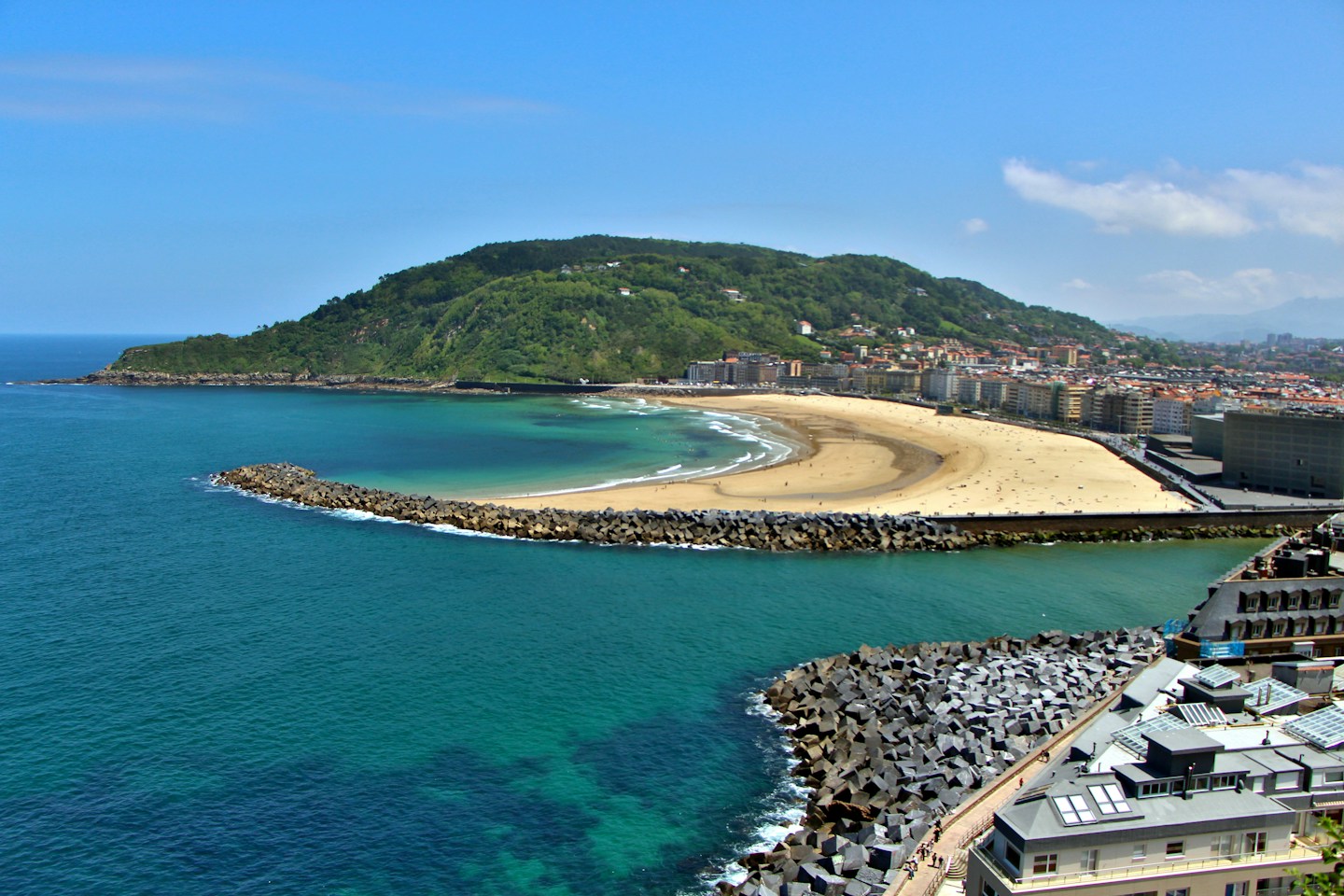
La Concha provides an obvious orientation point in San Sebastián, but it should not absorb the whole city into one bay view. The public waterfront can support a generous walk at the pace of the group, with time to sit and observe changing light. Choose a clear stretch rather than assuming the entire shoreline must be completed. Wind, rain and the effort already spent elsewhere can make a shorter route the better afternoon.
The old town and the streets beyond it offer a different density from the promenade. Explore them as a neighborhood setting, looking at public squares and cultural spaces as well as food counters. Other parts of the city, including the area around Zurriola, add another coastal perspective when the stay permits. Pick an area for its particular appeal rather than moving continuously between viewpoints. The contrast between open water and more enclosed streets is more rewarding when each has time to register.
Pintxos require appetite, attention and a place to stand
A pintxo evening is easier to enjoy when it is not designed as a competitive circuit. Begin with a small number of places or simply a neighborhood, then ask how ordering works at each counter. Some items may be displayed while others are prepared to order. Clarify the choice and payment arrangement rather than handling food on an assumption. Make room for other customers and keep bags compact in crowded interiors.
Ask about ingredients, particularly when allergies or dietary needs make a short description insufficient. A small portion can still contain components that are not obvious. If the setting makes careful communication difficult, choose somewhere the question can be resolved comfortably. Taste with enough attention to notice what distinguishes one preparation from another, and leave room to stop when satisfied. Food culture is not better understood by continuing after appetite has gone. A few dishes enjoyed properly can provide a more durable memory than a long list of counters crossed off.
A substantial dinner belongs before a relaxed morning
Place a meal that matters on an evening without a difficult early departure the next day. This gives the occasion room and prevents a restaurant visit from becoming a countdown to packing. Book directly where appropriate, discuss any special needs and understand the menu format. A tasting experience, a set menu and an informal meal make different demands on time and appetite. Choose the form that suits the group.
The following morning can stay close to the base: a gentle walk, a simple breakfast or a return to a public space already encountered. This is not wasted time between headline experiences. It lets the city be inhabited briefly rather than consumed as a series of reservations. A rail itinerary gains ease when demanding activities and demanding transfers are not continually placed beside one another. Rested movement leaves more attention for both the journey and the city waiting at the other end.
A coastal excursion needs an inward and an outward plan
For a day outside the main city, identify the precise destination and the last useful return before leaving. Do not infer convenient rail access from proximity to a line on a regional map. The station may be some distance from the harbor, beach or walking route that attracted you. Check the complete pedestrian approach and whether the excursion still makes sense in the expected weather.
Keep the excursion small enough that the place itself has time. A settlement walk and lunch can be a full outing when the rail journey is included. Avoid linking several coastal stops merely because the first one seems easy to reach. Each additional departure imposes another deadline and another station approach. If the day turns wet or windy, choose a shorter public walk or remain in the main base, where cultural institutions and familiar streets can offer a worthwhile alternative without chasing conditions along the coast.
Rain can reveal the strength of a city base
Northern coastal weather should influence the balance of indoor and outdoor plans. Keep a substantial collection or cultural subject available, checking its opening day and current content. A museum visit should have independent interest rather than serve only as shelter. With several nights in one city, a waterfront walk can move to another period instead of being forced through the least pleasant part of a wet day.
Suitable clothing and footwear make short connections easier, but they do not turn every outdoor plan into a good idea. Assess conditions for any hill route or coastal path and follow local instructions. A city-based rail trip offers a useful flexibility: an ambitious excursion can become a neighborhood day without moving accommodation. This advantage is lost when every night is spent somewhere new and the next transfer leaves no opportunity to revisit a place once the weather improves.
End with distinct cities rather than a general northern impression
Before adding the final stop, ask whether the existing places have established clear identities. Can you remember Bilbao through something beyond one building and San Sebastián through something beyond one meal? A local collection, an ordinary neighborhood walk and a familiar route back to accommodation often provide that distinction. These experiences need time that an additional long transfer would remove.
Protect the final onward connection with a realistic route and, where necessary, a nearer overnight stay. A compact trip should end with the same care that made it comfortable in the middle. Rail has connected cities whose differences are the reason for traveling; it need not prove its value through continuous distance. The satisfying result is a sequence of substantial stays, with meals, streets and coastal weather remembered as parts of particular places rather than as scenery glimpsed between departures.
A few practical questions
Is a broad pass automatically the best choice?
Compare the actual operators, services and journeys first. Coverage, reservations and flexibility may differ, so a pass should support the route you intend rather than persuade you to add travel simply to justify the product.
Can a first northern Spain trip focus only on Bilbao and San Sebastián?
Yes. Several nights in each can provide substantial cultural, coastal and food experiences. Add a regional excursion only after confirming the full journey and keeping enough time for the cities themselves.
For current destination information, access guidance and local updates, visit the official Northern Spain travel resource. Check transport and attraction details directly before booking.
This is a general planning guide, not a live conditions report. Found something that needs updating? Send a correction.