Eastern Sicily with two bases and fewer transfers
Eastern Sicily combines volcanic landscapes, historic streets and a varied shoreline. A two-base approach gives these different settings more breathing room than a hotel change every night.
Inside this story
Eastern Sicily makes a persuasive case for two bases and fewer hotel changes. Catania gives an urban and volcanic frame; a stay around Syracuse and Ortigia creates room for a different sequence of streets, waterfront walks and historical layers. The exact split should follow your interests and transport, but the principle is useful: remain long enough that each place develops a daily rhythm. Taormina, Etna and archaeological sites can then be deliberate outings instead of compulsory additions to every transfer. Summer heat, luggage access and the distance between stations and actual destinations all matter more than the compact appearance of the region on a map.
- Catania provides an urban introduction to the region’s volcanic building stone.
- Rail and bus connections should be checked for the exact pair of towns.
- Keeping an unplanned half-day helps absorb delayed transfers or changing weather.
Give the first base a clear purpose
Catania can serve as an introduction to the region's urban life and volcanic building materials. If those interests appeal, give the city a proper day rather than spending every morning leaving it. Walk a coherent central area, choose an interior or collection and make lunch part of the route. Notice the color and texture of buildings without assuming every dark surface has an identical history. Interpretation helps turn a visual impression into a more specific understanding.
If your main interests lie farther south, a shorter Catania stay may be appropriate, but avoid making it a base solely because its name appears on an arrival ticket. Compare actual transport to the places you want to visit. Check the walk from the accommodation to the useful station or stop, including the burden of luggage. A room convenient for an airport transfer may be less convenient for several days of walking, and the reverse can also be true. Start with the behavior you want from the base: a settled urban morning, straightforward excursions or a simple arrival night. That makes the accommodation decision much clearer than choosing by reputation alone.
The Pescheria, Catania’s historic fish market near Piazza Duomo, supplies a particularly concrete connection between the city and the sea. Visit Sicily identifies it among the island’s historic markets. Give customers and traders room, especially where a display attracts photographers, and make a close portrait only with permission. The interest is not solely visual abundance: a market reveals what is being bought, how transactions happen and how food reaches the urban table. A nearby meal can follow naturally, while the surrounding streets lead back toward civic and religious spaces. Official context is available at visitsicily.info.
Let Ortigia become familiar
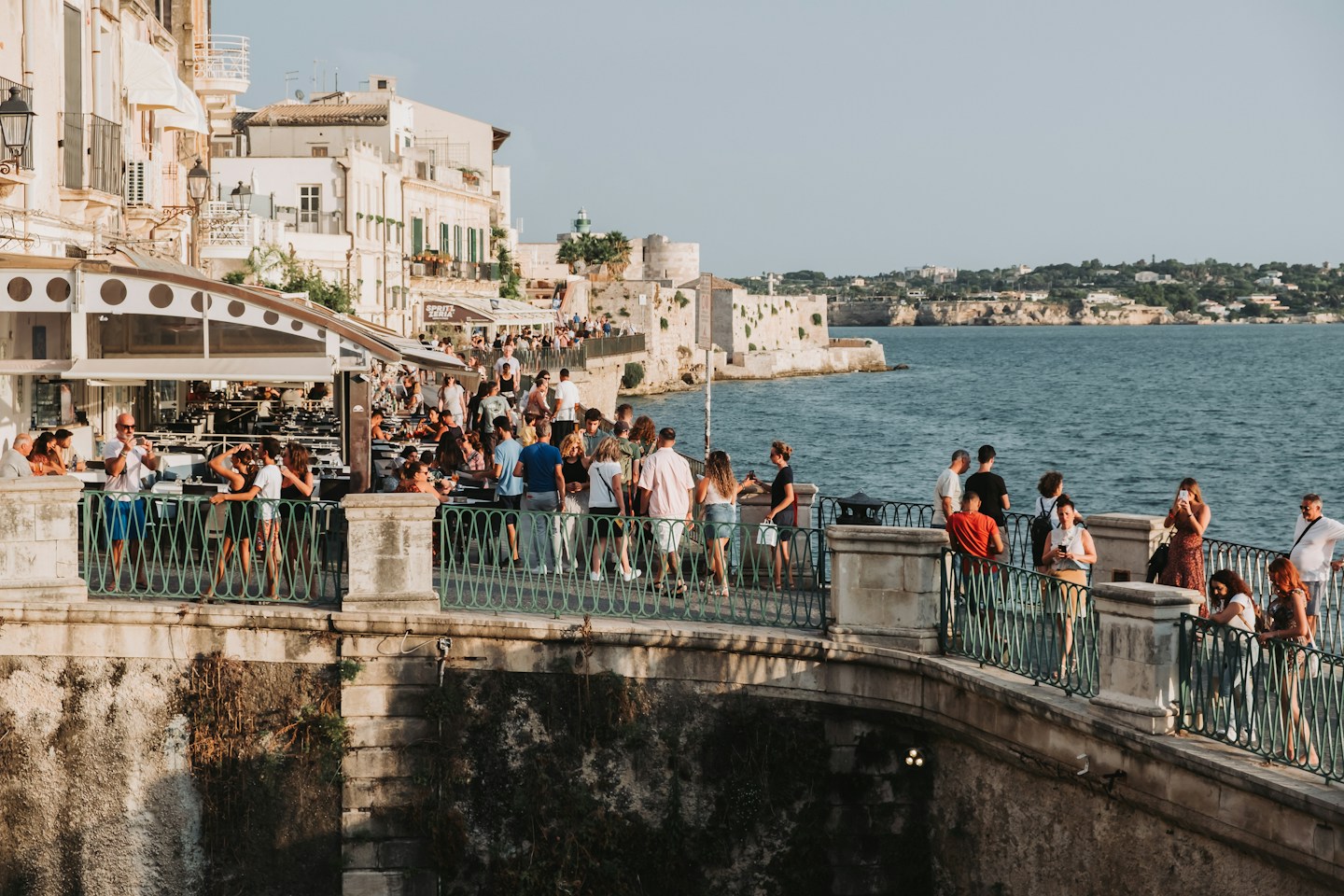
Ortigia is the island historic center within Syracuse, and its compactness supports repeated short walks. Give it enough time to become more than a single circuit around photographed landmarks. Begin with a route connecting the accommodation, food and a few public reference points, then explore adjoining streets in manageable sections. Pay attention to where residential life continues behind the visitor-oriented frontage. An open doorway or appealing courtyard does not automatically establish public access.
An early walk and an evening return can reveal different uses of the same streets without requiring another transfer. Keep the strongest heat for an interior visit, a meal or rest if that suits the conditions. Waterfront time works well as part of this pattern, provided you choose places where stopping does not obstruct movement. Ortigia is particularly well suited to the idea that repetition is exploration: the second or third encounter reveals a detail missed when you were still finding your way. A familiar bakery or comfortable lunch table can become the anchor around which a day's cultural visit and unplanned wandering fit naturally.
Look for history inside the cathedral's walls
Syracuse Cathedral offers a concrete example of historical layers occupying the same structure. The local archdiocese describes the ancient Doric columns of the Temple of Athena incorporated into the cathedral. That relationship rewards attention to the building's fabric, not simply a photograph of its façade. Read the official account before visiting, then look for the features it explains: santalucia.arcidiocesi.siracusa.it.
A religious building remains a place of worship, so follow current access, dress and photography rules. Check visitor arrangements directly rather than planning from an old timetable. Allow enough time to understand how the space has changed across periods without expecting one building to summarize all Sicilian history. If worship or another event limits access, choose a different part of the walk and return when appropriate. The wider lesson applies throughout Ortigia: ancient, religious and later urban elements are not neatly separated into successive themed zones. They meet within the same streets and structures. Looking carefully at one such meeting can make the rest of the island's architectural detail much more intelligible.
Keep archaeology from becoming a midday endurance test
An archaeological site can require extensive outdoor walking even when it is close to an urban base. Examine the actual visitor route, surfaces, gradients and available shade. Carry appropriate water and sun protection, and do not equate a cultural outing with low physical effort. In hot conditions, choose timing and duration that suit the group rather than placing the visit after an already demanding morning.
Select the site for genuine interest and give interpretation time to work. A short informed visit can be more useful than a long walk through structures whose purpose remains unclear. Ask which access arrangements apply to mobility needs and whether there are practical shorter options. Keep to designated routes and avoid sitting or climbing on fabric outside authorized arrangements. Plan the meal afterward close enough that everyone can recover without another substantial transfer. The day should have a shape beyond the entrance ticket: comfortable arrival, attentive exploration and a sensible conclusion. This is especially important when several travelers have different tolerances for heat or walking and one person's enthusiasm can inadvertently determine everyone else's afternoon.
Treat Etna as an active setting
An Etna outing depends on current conditions and official restrictions, not simply a desire to reach a dramatic viewpoint. Decide what sort of experience you want, then ask a responsible operator what is appropriate for your group and the day. Lower-level interpretation and more demanding excursions are different propositions. Do not transfer confidence from an easy city walk to uneven volcanic terrain or assume that an available vehicle connection makes the ground beyond it straightforward.
Confirm the meeting point, equipment, expected walking and cancellation arrangements. Leave enough room in the schedule that a changed plan does not jeopardize the next night's accommodation. Follow restrictions even when another visitor appears willing to ignore them. If the outing cannot proceed, use the time in Catania or another suitable nearby setting rather than searching for an unofficial approach. Etna is not a fixed scenic product waiting to be delivered on demand. Its changing conditions are part of the reason to visit responsibly. Understanding something about the volcano through interpretation can remain valuable even when the day's access is more limited than expected.
Give Taormina a vertical map
Taormina sits above the shoreline, which makes the final approach a significant part of any visit. Check where the train, bus or arranged transfer actually leaves you and how you reach the places you intend to see. A town name on a transport ticket does not guarantee arrival at the center of the walking area. Include that connection when deciding whether the excursion fits comfortably from your base.
Choose a focused visit rather than combining every visible level of the coast into one continuous outing. An elevated town walk, a substantial cultural site and a beach below may each involve more movement than the map suggests. Keep the return realistic, particularly after dinner or in hot weather. If only a short visit is possible, select the interest that brought you rather than hurrying through a standard sequence. For some travelers, remaining longer in Ortigia will produce a more satisfying trip than adding another celebrated name. The decision should arise from geography, available time and preference, rather than an obligation to reproduce a complete eastern Sicily circuit.
Plan meals in relation to movement
A seaside meal sounds restful until the journey home depends on an unconfirmed late service. Before settling into a long lunch or dinner away from the base, know the return route and the relevant departure. A private transfer should be arranged clearly rather than assumed available at short notice. Within the base, a nearby restaurant can make the evening more relaxed after a day of exposed walking.
Ask about preparations and ingredients, especially where dietary restrictions matter. A familiar name or broad category does not guarantee a particular recipe. If staying in an apartment, consider whether you genuinely want to shop and cook; a kitchen offers little practical benefit when every day is built around distant excursions. A simple market purchase and a quiet evening can be appealing when the schedule leaves room for them. Food becomes part of understanding the region through repetition and particular places, not solely through pursuing a list of famous dishes. Let one comfortable meal occupy the center of a lighter day and see how much more pleasant the surrounding walking becomes.
Leave the last half-day open
A two-base journey gains resilience when one half-day remains unassigned. It can absorb a delayed transfer, provide another opportunity for a weather-dependent outing or simply allow return to a place that deserved more attention. This is useful space, not time awaiting a compulsory attraction. Keep the final connection to a flight or onward train conservative, with accommodation access and luggage collection included.
Use visitsicily.info for official regional orientation and confirm specific transport and visitor arrangements directly. Remember that historic streets can complicate luggage access even when the room lies near a main route. By departure, a well-paced stay should have established clear contrasts: Catania's urban volcanic setting, Ortigia's layered streets and the separate demands of the chosen excursions. Those distinctions make eastern Sicily more coherent than a succession of one-night stops. The benefit of two bases is not merely fewer check-ins. It is the possibility of having an ordinary morning in each place, and enough familiarity to understand what makes the next one different.
A few practical questions
Is two-base travel always the right choice?
It suits many eastern Sicily visits, but the split should follow interests and actual connections. A very short stay may benefit from one base and fewer excursions.
What needs checking for an Etna outing?
Confirm current official restrictions, the specific route, walking demands, equipment, meeting arrangements and the operator's response to changed conditions.
For current destination information, access guidance and local updates, visit the official Sicily travel resource. Check transport and attraction details directly before booking.
This is a general planning guide, not a live conditions report. Found something that needs updating? Send a correction.