Banff beyond a single turquoise lake
Banff is a mountain landscape with tightly managed visitor access. Build a trip around realistic transport and wildlife awareness, then let the lakes be part of a wider valley experience.
Inside this story
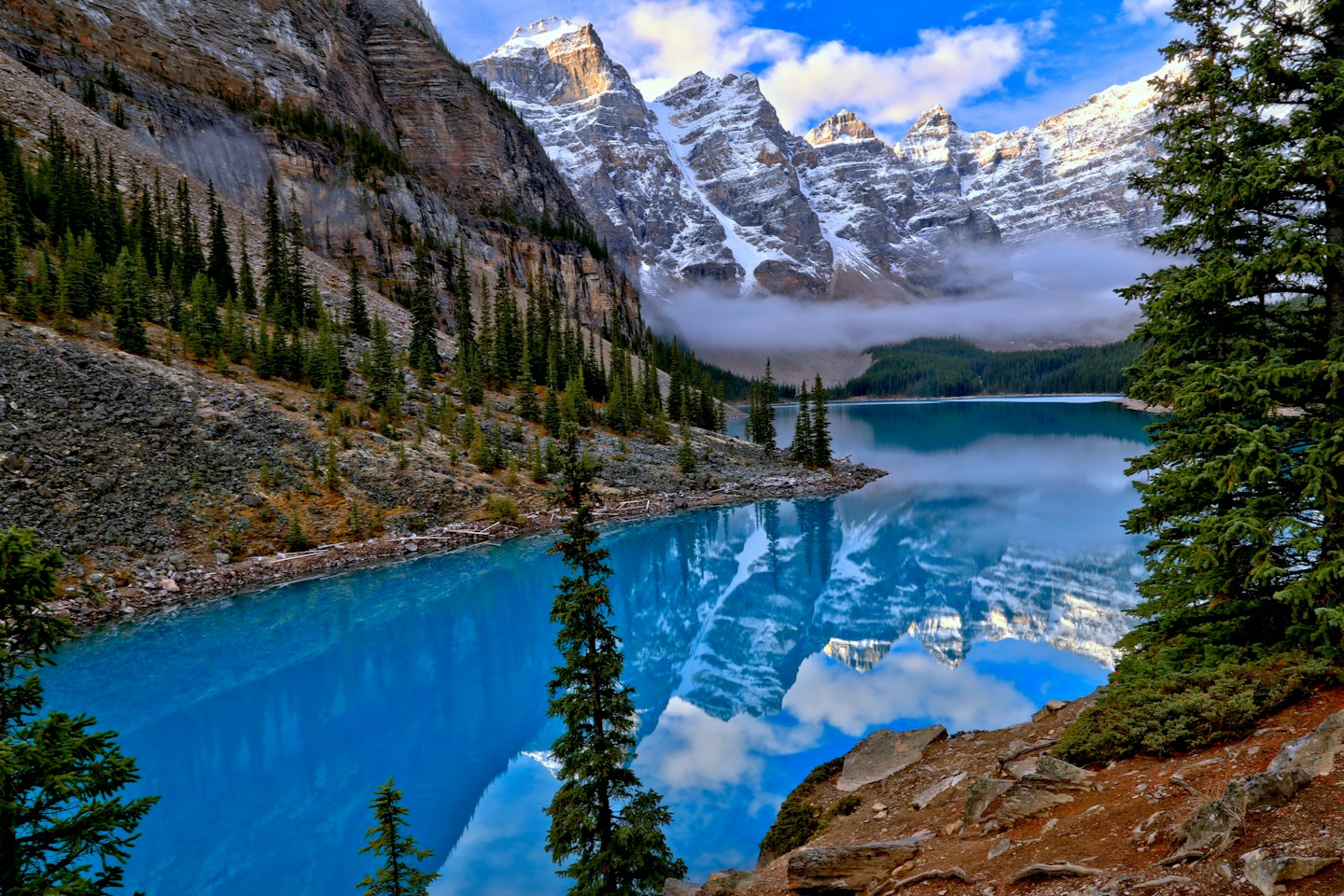
A photograph of a turquoise lake shows very little of what makes a Banff visit work. Outside the frame are transport reservations, mountain weather, wildlife habitat and the distance between bases. Those arrangements deserve attention before the trip, because they determine whether the day feels relaxed or becomes a search for access. Once the practical questions are settled, the celebrated lakes can sit within a broader experience of valleys, rivers and time outdoors.
Banff National Park should not be reduced to a single view. A stay that includes the Bow River near town, one well-planned lake outing and a walk matched to current conditions can be more rewarding than a daily circuit of crowded parking areas. The landscape gains meaning through continuity: recognizing a mountain shape, understanding a valley connection and learning why a route is available one day but restricted on another.
- Banff town and Lake Louise are separate bases with meaningful travel time between them.
- Trail closures protect both visitors and animals and can change a planned route.
- Parks Canada updates should guide the final itinerary rather than old social media posts.
Banff town and Lake Louise are separate bases
Choose accommodation according to the part of the park where you intend to spend time. Banff town and Lake Louise involve meaningful travel between them, so they should not be treated as adjacent neighborhoods. A room in one does not place you at the other lake's transport departure. Map the actual journeys before booking, including where you must check in for any reserved service and how the final return will reach your accommodation.
Banff town can support a stay with local meals, lower-elevation outings and transport-based excursions. A Lake Louise base changes the practical shape of lake and mountain days. Neither is universally better. Compare what each enables for your interests, while recognizing that a hotel description using the name of a lake may not mean the waterfront is a short walk away. Exact location matters more than the broad destination label.
Try to avoid changing rooms solely to save one journey if the move creates additional packing and check-in demands. Several nights in one base can provide flexibility when weather changes, especially if there are worthwhile alternatives nearby. A split stay may make sense for a longer trip, but its purpose should be clear. The goal is to spend time in the landscape, not continually reposition bags in response to every attractive point on the map.
Solve lake access before planning the afternoon
Popular lake access is managed, and arrangements need to be checked directly with Parks Canada and the relevant transport operator. Do not assume a private vehicle can reach every desired parking area or that arriving earlier will solve every restriction. A plan based on an old blog post can fail before the walk begins. Look at the current system for the particular lake, date and service rather than borrowing confidence from a different season.
Read a reservation as a complete journey. Where is the boarding point, what must you present, and how does the return work? Save the relevant information where it can be accessed without relying on reception at the destination. Include time for reaching the departure point and finding the correct queue. A transport booking can make access more predictable, but only when the traveler understands which location and service have actually been reserved.
Keep the afternoon realistic once access is arranged. A lake visit includes waiting, walking between facilities and the time spent simply looking. Adding a long hike to a transport day may be appropriate, but it requires a separate route decision and sufficient return margin. The reservation does not create an obligation to continue if the weather deteriorates or the group feels unwell. It is a means of arriving responsibly, not a reason to ignore conditions after arrival.
Separate a shoreline visit from a mountain walk
A lake photograph says little about the difficulty of paths that begin nearby. A modest waterfront outing and an ascent into higher terrain are different activities, even when they share the same initial arrival point. Choose the intended walk by its full description: distance, elevation change, surface, exposure and current condition. Do not let the apparent convenience of a famous trailhead replace an assessment of whether the route suits everyone.
Higher walks can encounter colder conditions than the town suggests. Pack for the actual outing and check current trail reports, especially when snow or ice could affect the route. A summer date alone does not guarantee summer footing in the mountains. If the suitable option is a shorter shoreline walk, give it full attention. Watching changing light and understanding the shape of the valley can make a satisfying visit without extending into terrain chosen primarily for a distant viewpoint.
For groups with mixed ambitions, discuss alternatives before setting out. One person may want a sustained hike while another prefers a gentle walk and time to sit. Clear meeting arrangements and a suitable plan for each are better than persuading everyone onto the same path and negotiating discomfort later. Keep any separation appropriate to experience, communications and transport. Independence should improve the day without leaving someone uncertain about how or when to return.
The Bow River adds an everyday landscape
Time beside the Bow River near Banff town offers a lower-elevation counterpoint to the managed lake excursions. Choose a specific public route using current local information, then keep the outing modest enough to enjoy the surroundings. River movement, nearby woodland and mountain edges create a different experience from standing before still water. The advantage is not that the outing lacks practical considerations, but that it may fit naturally into a day based around town.
Use a river walk to understand where the settlement sits. Notice how buildings give way to more open ground and how routes connect back to meals or accommodation. A local outing can make the base feel like part of the visit rather than merely a place to sleep between distant attractions. It also gives an arrival or recovery day substance without demanding an early departure and a tightly managed reservation.
Lower elevation does not eliminate wildlife awareness or the need to follow local notices. Read signs, remain on appropriate routes and keep food managed according to park guidance. A path close to town remains within a protected landscape. Treating it with the same attentiveness as a remote outing helps connect the familiar visitor environment to the ecological setting around it, rather than assuming the two are entirely separate worlds.
Wildlife changes the meaning of a good photograph
Animals should be observed at a distance without feeding, approaching or attempting to influence their behavior. The strongest wildlife encounter is one in which the animal remains undisturbed. Use a suitable lens or accept a smaller image rather than trying to fill the frame through proximity. A memorable sighting does not need to become a close portrait, and the presence of other people nearby does not establish that approaching is appropriate.
Read Parks Canada's current wildlife and bear-safety guidance before traveling, including its advice about bear spray and responsible outdoor behavior. Learn what the chosen activity requires instead of assuming that a busy path or a picnic near town removes the issue. Food and scented items need proper handling, particularly when camping. Ask staff about the arrangements relevant to your accommodation and outings, then follow the instructions rather than improvising a storage method.
Closures protect animals as well as visitors. If a route is closed or restricted, choose another outing rather than stepping around a barrier or following an unofficial line. This is one of the practical benefits of a varied plan: the alternative has already been considered and need not feel like a crisis. Access to protected habitat is conditional on its needs, and a responsible visit accepts that the landscape's inhabitants are not required to accommodate the itinerary.
Roads are routes, not improvised viewing areas
Roadside scenery can be compelling, especially when a mountain or animal appears unexpectedly. Stop only where it is legal and appropriate, without blocking traffic or using a live lane as a viewing point. If no suitable place exists, continue. A driver cannot safely navigate and search continuously for photographs at the same time, so share observation duties where possible and discuss desired stops before reaching them.
Build driving days around a modest number of purposeful outings. Repeated short stops create fatigue and can leave little time for a proper walk or meal. A viewpoint reached in a calm, well-timed journey will often be more enjoyable than the same view squeezed between several long transfers. Include fuel, food and rest in the day rather than treating them as details that will solve themselves somewhere between destinations.
Weather and other park conditions can change the available route. Check official notices before departure and again when plans depend on a particular road or trail. The photograph that inspired the journey may have been made under entirely different conditions. A good visit responds to the landscape present that day, accepting a shorter drive or local afternoon when that is the most suitable choice.
Give the park more than its most famous color
A coherent first stay can include a locally based arrival day, one carefully organized lake outing and another day chosen according to weather and trail conditions. Leave time for interpretation about the park's natural and human histories. The mountains are not anonymous scenery, and learning even a little about the place can make a familiar view more specific. Choose interpretation presented by reliable park or community sources rather than relying solely on visual impressions.
Use Parks Canada as the starting point for current access, wildlife, trail and closure information, with transport providers confirming their own services. Keep enough room to revise the plan. Banff's appeal grows when the lakes become part of an understood valley landscape, connected by responsible movement and meaningful pauses. The result is a visit with more substance than a successful photograph, and fewer moments spent wondering whether the next essential arrangement has been overlooked.
For current destination information, access guidance and local updates, visit the official Banff travel resource. Check transport and attraction details directly before booking.
This is a general planning guide, not a live conditions report. Found something that needs updating? Send a correction.