A Lake District stay with room for rain
The Lake District works beautifully when a trip has more than one version. Keep a low-level walk, a lakeside outing and an indoor afternoon ready alongside any ambitious fell plans.
Inside this story
Rain belongs inside a Lake District plan from the beginning. It can change visibility, ground conditions and the appeal of a route, but it need not make the whole day a substitute for the trip you wanted. Choose a base with several kinds of outing nearby: a lower walk, time beside a lake and a cultural or village afternoon. Reserve more exposed fell routes for conditions and abilities that suit them. This creates a stay with choices rather than a single version vulnerable to the forecast.
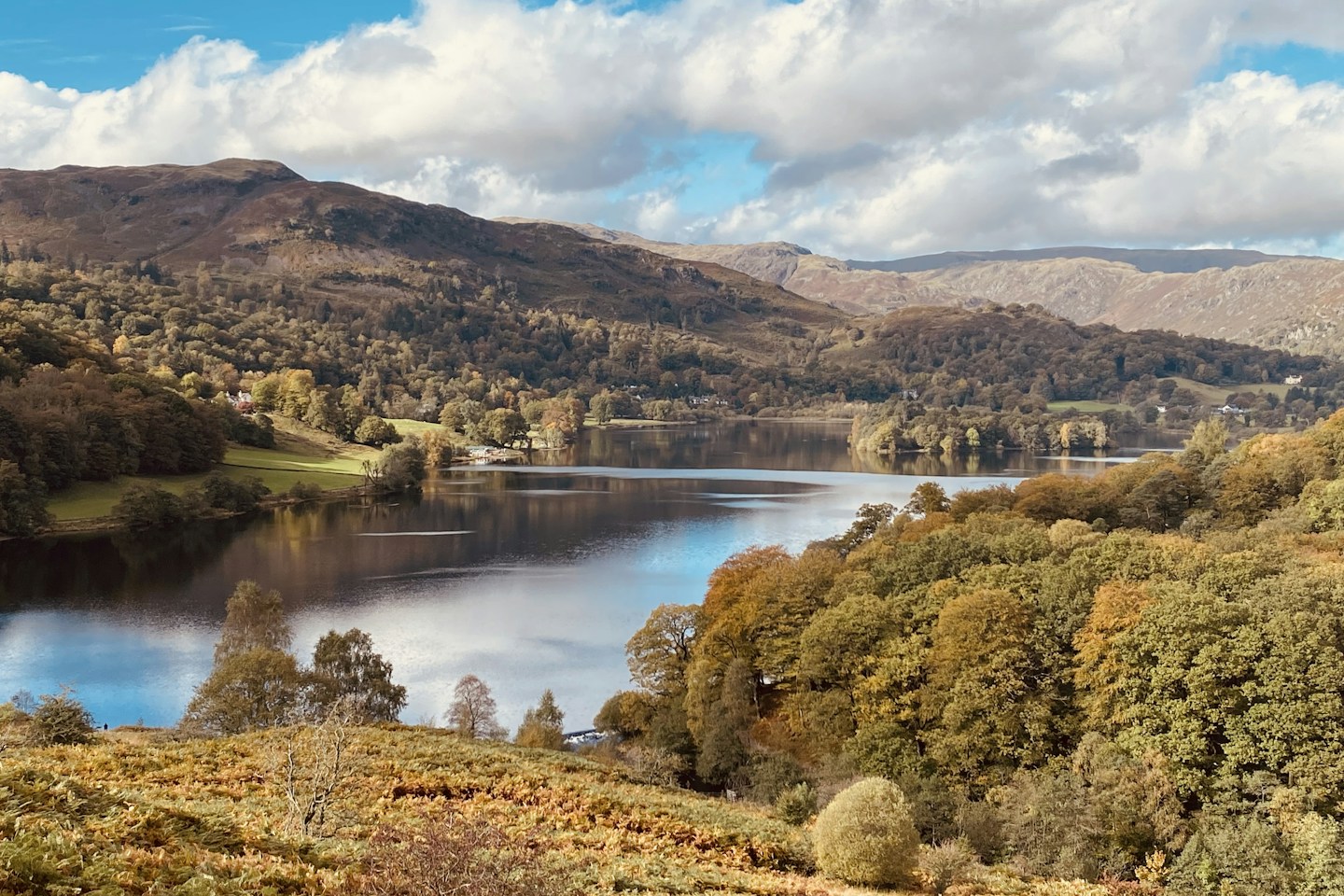
The landscape is not experienced only from high ground. Valleys, water edges, stone buildings and changing cloud all contribute to its character. A day that remains close to one lake can be more satisfying than a succession of drives between famous names, particularly when short stops leave little opportunity to understand the places beyond their car parks.
- Windermere and Keswick serve different parts of the national park.
- Bus and boat connections can support a less car-dependent stay.
- National park guidance is more useful for route decisions than a photograph of a summit.
Windermere and Keswick imply different holidays
Choosing between Windermere and Keswick is partly a decision about which area you want to know. They support different routes and connections, so compare the walks and services near each rather than treating them as interchangeable bases for the entire national park. A room's usefulness comes from the days it enables comfortably. The best base may be the one from which you can begin a worthwhile outing without first driving across the region.
Around Windermere, examine the relationship between the accommodation, lake access and the transport you intend to use. A town name does not guarantee a waterside location. Around Keswick, consider which nearby routes and connections support your interests in the northern landscape. In both cases, look at the final approach to the property and where evening meals will come from. A remote-looking stay can be appealing, but its practical consequences should be understood before booking.
Several nights in one place allow weather decisions to improve. If the higher walk is unsuitable today, another part of the stay may offer a better opportunity. Constantly changing rooms reduces that freedom because each route becomes attached to a departure deadline. A settled base also creates the pleasure of returning: familiar streets, somewhere to dry clothing and an evening that does not depend on negotiating another unfamiliar road after a tiring outing.
Write a genuinely different rainy-day plan
A useful poor-weather alternative changes the exposure and demands of the day. Replacing one high ridge with another nearby summit does not create much resilience when wind and cloud affect both. Choose something lower, shorter or more sheltered according to current conditions, and accept that severe weather may make an indoor day the sensible choice. The point is to preserve an enjoyable experience, not find a technical argument for maintaining the original ambition.
Select the alternatives before breakfast becomes a debate. Identify a local collection, a village route and a lower walk, then check their current details. A good alternative should interest the group in its own right. If everyone thinks of it only as the disappointing option, the day will struggle to acquire its own purpose. A subject-focused museum visit or a proper lunch can be a welcome change after several days concentrating on paths and weather.
Drying arrangements matter too. Ask whether the accommodation has suitable facilities for wet outdoor clothing, and pack so damp items can be separated from the rest. Repeatedly beginning the day with uncomfortable equipment can drain enthusiasm more quickly than the rain itself. Keeping one set of clothes for the evening also helps the transition from outdoors to rest feel deliberate, rather than extending the walk's discomfort through dinner and the next morning.
Fell walking begins before the first step
A fell walk may start near a village yet quickly involve rough ground, uncertain visibility and exposure. Proximity to shops does not describe the route beyond the initial path. Read the whole walk, including ascent, descent and navigation demands, and use a map appropriate to the terrain. A phone can be useful, but the plan should account for power, weather and the difficulty of interpreting a small screen when conditions deteriorate.
Choose according to the least experienced or least comfortable person in the group. Steep descents can be more challenging than the climb, especially when the surface is wet. A route that seems short in distance may occupy much of the day once pauses and cautious footing are included. Leave a generous return margin instead of attaching dinner or a transport departure to the earliest plausible finish. The outing will be easier to enjoy without a deadline pressing on the descent.
Check a mountain-specific forecast and current national park guidance rather than relying only on a town weather symbol. If cloud removes the view, navigation and exposure may become more significant than the scenery promised by the photograph. Turnaround decisions should remain available throughout the walk. Reaching a summit is one possible result of the day; returning with everyone comfortable is what allows the rest of the stay to continue well.
Lower does not mean featureless
Borrowdale offers valley scenery that does not require every visitor to climb high. The relationship between enclosed slopes, water, fields and settlement gives a lower walk a clear subject. Choose a specific route and inspect its terrain rather than assuming all valley paths are level. Mud, stones, steps or waterlogged sections can still affect comfort and accessibility. A suitable lower walk is a chosen route, not merely whatever path remains after abandoning a summit.
Look at the landscape in layers. Near details such as walls, trees and the path surface can be as rewarding as a distant skyline, especially in shifting weather. Cloud may obscure the high ground while making the valley's shape more visible through changing contrast. You do not need to turn these observations into a photography exercise. Walking slowly enough to notice them can transform what initially appeared to be a reduced version of the day.
Keep food and the return practical. A route that ends near a village or reliable connection can be useful when the forecast is uncertain. Verify current service details if transport is involved, and know whether the walk can be shortened sensibly. Do not mistake a river crossing or an informal line across a field for an appropriate alternative. Staying with a clear, suitable route allows the lower landscape to be enjoyed without improvising access or terrain decisions halfway through.
Choose lake access by its actual surface
Lakeside walking varies considerably. Some sections may be broad and well surfaced; others involve rough ground, narrow paths or steps. Water nearby does not establish accessibility. The national park's Miles Without Stiles resources provide graded route information that is more useful than a general claim that a walk suits everyone. Read the detailed description against the needs of your group, including gradient, gates, seating and the length of the return.
A lake outing need not be a complete circuit. A comfortable section with time to pause can give a fuller impression than a long route undertaken mainly to close the loop. Notice how wind changes the water and how surrounding slopes meet the shoreline. Revisit the same section later if conditions differ. That repetition reveals change without requiring another parking search or a transfer to a lake selected only because it has not yet been seen.
Water activities require separate judgments. A beautiful shore does not tell you about temperature, depth or conditions farther out. Use appropriate current guidance and suitable arrangements for whatever activity you intend, rather than treating it as an automatic extension of a walk. Remaining on land is a complete way to experience the lake. The value of the visit lies in attention to the landscape, not in turning every attractive feature into an additional undertaking.
Let buses and boats support a modest radius
Bus and boat services can help create a stay with less driving, but they need to be planned as actual journeys. Check current timetables, boarding points and seasonal operations. Include the walk between accommodation and departure, and leave enough margin for a comfortable connection. A suggested circular itinerary can be misleading if one service operates differently on the day you intend to travel or the final departure leaves little room for delay.
A boat journey can become the day's main experience rather than a mechanism for fitting in another walk. Give it time to show the lake at a different scale, then choose a manageable activity at the other end. If you plan to return by another mode, understand the exact location and timing. Practical clarity lets the journey feel relaxed. Depending on an unverified connection can turn an otherwise pleasant afternoon into a scramble.
Driving requires its own restraint. Busy trailhead parking is a reason to plan the arrival and consider alternatives, not to improvise a space on a verge or obstruct access. Avoid building each day around a new distant starting point if nearby options meet your interests. The landscape is better experienced outside a vehicle, and a familiar base can support plenty of variety without repeatedly crossing the national park.
Share a working landscape considerately
Fields, livestock and wildlife are part of the setting, not decorative additions to a public playground. Follow local signs, use appropriate routes and keep dogs under the control required for the location and circumstances. Leave gates as instructed and give animals space. A short pause to read access information is more useful than relying on what another group appears to be doing. Their route and responsibilities may not be the same as yours.
Use official Lake District information to choose routes and understand current conditions, with operators confirming transport arrangements. Keep the final plan varied enough to welcome a quiet day. A lakeside morning, a valley walk and a cultural afternoon can each carry the stay when a high route is unsuitable. The reward is a holiday that belongs to the Lake District as it actually appears, with rain and cloud included, rather than to a photograph of a single clear summit.
For current destination information, access guidance and local updates, visit the official Lake District travel resource. Check transport and attraction details directly before booking.
This is a general planning guide, not a live conditions report. Found something that needs updating? Send a correction.