Madeira’s green interior: choosing a gentler walking week
Madeira has dramatic paths, but a rewarding walking holiday need not become an endurance test. Match each route to its exposure, weather and current access status, then leave time for gardens and coastal towns.
Inside this story
A walking week in Madeira need not be an escalating sequence of dramatic ridges. The island offers several kinds of landscape, and a visit can draw its variety from forest, water channels, gardens and coastal towns as well as mountain panoramas. The essential decision is not which photograph to reproduce first. It is which routes match your comfort with exposure, uneven ground, tunnels and changeable conditions, with enough flexibility to enjoy the island when the interior is clouded or wet.
Funchal can provide a practical urban base, but many walking areas require transfers. That geography shapes the day before the first step on a trail. A manageable outing depends on the road journey, access status and return arrangement as much as on the route's advertised distance. Think of the week as a mixture of distinct experiences, each with its own practical demands, rather than a checklist of paths that all promise the same kind of walk.
- Funchal makes a practical urban base but many walking areas require transfers.
- Laurissilva forest offers an experience distinct from exposed ridge walking.
- Staying on official paths protects vegetation and avoids unsafe shortcuts.
A levada is a water channel, not a difficulty grade
The word levada identifies the water channel associated with a route; it does not establish a uniform standard for the path beside it. Some walks may involve broad, relatively gentle sections, while others include narrow ledges, steep drops or tunnels. Read the description of the particular route from its actual starting point to the intended finish. Do not transfer confidence from an easier levada outing to another simply because the name sounds similar.
Look closely at the parts that matter to your group. A short exposed section can determine whether the whole walk feels comfortable, regardless of how easy the remaining distance appears. Ask about path width, barriers, passing places and the condition of the ground. A route that is physically manageable for someone with good fitness may still be unsuitable if heights cause anxiety. Honesty about that distinction prevents a day of unnecessary stress.
The water-channel setting can be fascinating when you have chosen an appropriate path. Notice how the route follows the contour and how small changes in the surrounding terrain affect what you see. Moving slowly makes the relationship between water, vegetation and slope easier to appreciate. There is no need to seek the narrowest or most dramatic passage for the outing to feel characteristic of Madeira. A comfortable walk allows attention to move beyond footing and fear.
Read official trail status close to the walk
Madeira's official tourism information provides classified route details and access status. Check the specific trail before departure, and respect closures or restrictions encountered on site. Landslides, maintenance and weather-related damage can affect a route independently of the conditions visible at your hotel. A sunny morning in Funchal is not evidence that an interior path is open or suitable. Current information should govern the decision, not the age or popularity of an itinerary saved earlier.
A route may also have arrangements beyond simply turning up at a trailhead. Read the current visitor instructions for the date and activity you intend. If an operator is organizing transport, ask whether the quoted outing includes the required arrangements or whether anything remains your responsibility. Clear answers are particularly important when several people or services are involved. The point is to arrive knowing what the walk entails rather than resolve access questions after the transfer.
Have an alternative with a different character. If an interior route is unsuitable, a garden, cultural visit or town afternoon may offer a better day than searching hurriedly for another exposed walk. Choose the alternative because it interests you, and give it enough time. A week with several worthwhile options can absorb a closure without turning it into a judgment on the whole trip. Flexibility becomes useful when the alternatives are concrete and appealing.
Funchal is a base with its own gradients
An urban base does not mean every walk from the accommodation is level. Examine the exact street and the approach from useful transport or pickup points. A room described as close to the center may sit above the area where you expect to eat or meet a transfer. Ask about steps and luggage access inside the property as well. These details matter after a trail day, when another steep climb may be less attractive than it appeared at booking.
Give Funchal time beyond the early departure and late return. A garden visit, a cultural stop and a meal can form a day of their own. That slower period provides recovery between walks and prevents the city from becoming merely a convenient address for sleeping. Look at how planted spaces, streets and views work together rather than assuming every garden offers the same experience. Choose according to the collection or setting that actually interests you.
Keep at least some evenings local. After a transfer through steep terrain and several hours on foot, an uncomplicated dinner can complete the day more pleasantly than another journey. If food is a major interest, place a carefully planned meal on a lighter day. This gives you energy to enjoy it and avoids making the return from a weather-sensitive walk responsible for reaching a distant reservation at a fixed time.
Let the Laurissilva be more than a green backdrop
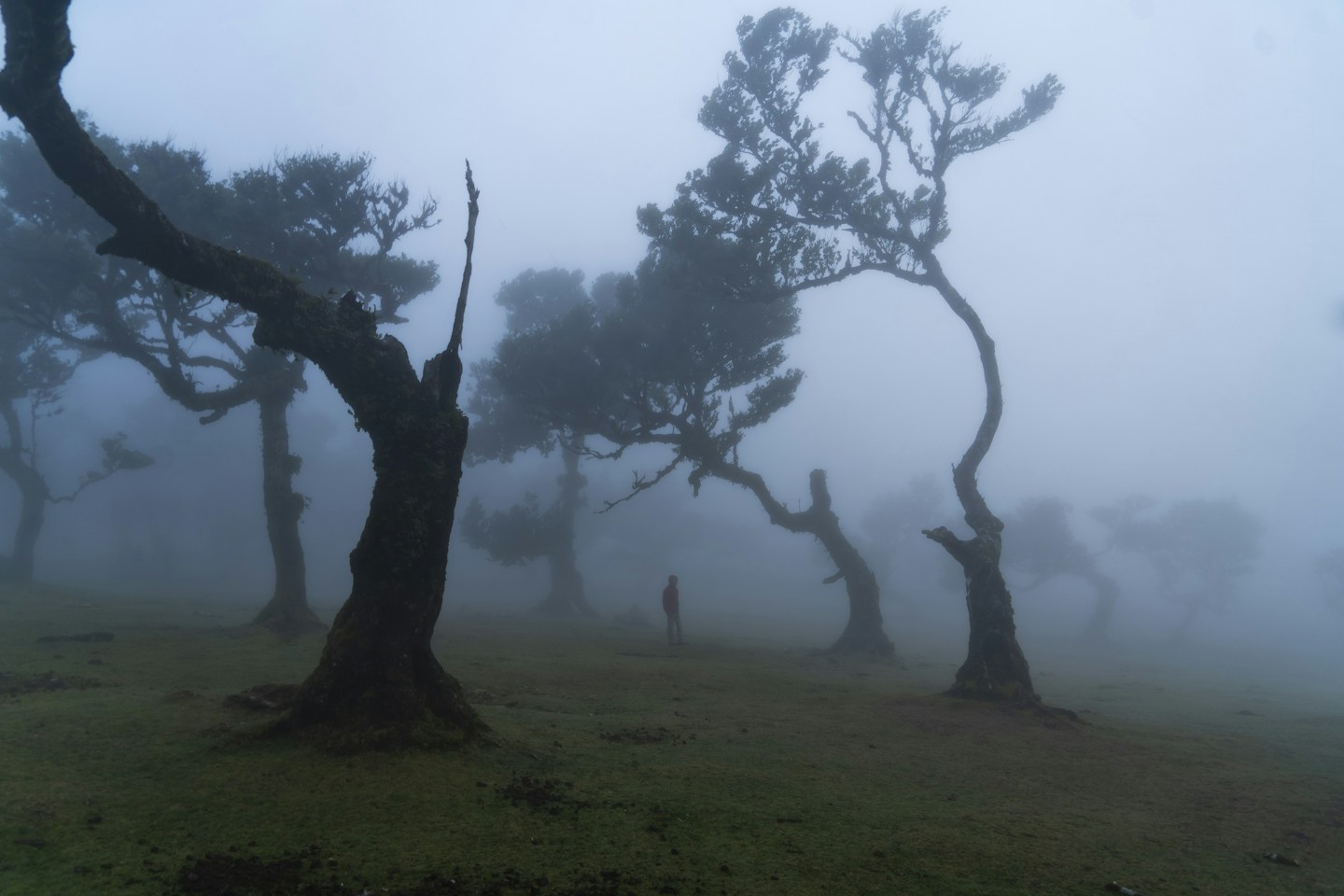
The Laurissilva offers a forest experience distinct from Madeira's open ridges. Enter with an interest in near detail as well as distant views: canopy, moisture, the texture of trunks and the way light changes beneath vegetation. A forest outing need not deliver a panorama to feel complete. When cloud limits the horizon, attention can shift to a smaller scale, provided the chosen path and current conditions remain appropriate.
Stay on designated routes. Vegetation near a path is not spare space for passing, staging photographs or seeking an unobstructed view. Wait where it is suitable to let another walker pass rather than widening the route through the margins. The landscape's appeal depends partly on conditions that careless foot traffic can damage. Looking from the established path is both responsible and sufficient; the experience does not require finding a position that appears untouched by anyone else.
Remember that forest does not automatically mean easy or protected from every hazard. Wet footing, steps and steep surrounding ground may still shape a route. Carry the equipment appropriate to the actual walk, and do not treat trees as a reason to disregard the forecast. A carefully chosen forest day can be gentler in character than a ridge excursion while still requiring sound route judgment. The two ideas are compatible: quieter scenery can reward the same serious preparation.
Tunnels and exposure need specific answers
If a route includes tunnels, find out what lighting and other equipment it requires before committing. A phone light should not be assumed sufficient simply because the passage appears brief in a photograph. Understand whether the tunnel is an unavoidable part of the route and how its dimensions or ground conditions affect the group. Anyone uncomfortable with enclosed spaces should know this beforehand rather than discover the issue after a long approach.
Exposure deserves the same specificity. A general difficulty label may not communicate how a narrow ledge will feel to an individual. Seek detailed route information and use an appropriate guide when that is the best way to match the outing to your experience. A guide can support interpretation and decision-making, but does not make every route suitable for every person. Describe concerns clearly when arranging an outing so the recommendation is based on the actual group.
Avoid improvising shortcuts or alternative passages around a difficult section. An informal line may lead onto unsuitable ground or sensitive vegetation. If the intended route no longer fits, turn back while the return is manageable. A sensible reversal preserves the rest of the week and can still include a worthwhile partial walk. The island's diversity means that one unsuitable path need not carry the burden of representing the whole walking holiday.
Transfer planning is part of route selection
Madeira's steep terrain makes road travel different from the straight-line distances visible on a map. A trailhead that appears near Funchal may involve a substantial journey, while two starting points close together geographically may not connect conveniently by road. Obtain realistic transfer information before fixing a sequence of walks. A shorter route reached comfortably can provide more time outdoors than a distant excursion whose approach consumes much of the day.
For a one-way walk, confirm exactly where and how you will be collected. Save the location, contact details and agreed arrangements in a form available without relying on continuous reception. Discuss what happens if the route takes longer or conditions require a change. The return should be an understood service, not an assumption that a vehicle will be available when you emerge. Clear arrangements also make it easier to turn around sensibly if necessary.
Keep food, water and suitable layers independent of an unverified stop. A café near a trailhead may be welcome, but its presence on a map does not guarantee service at the time you need it. Carry what the selected route requires and allow time to eat comfortably. The practical aim is to prevent small uncertainties from accumulating: a delayed transfer, an unavailable meal and a tired group can make an otherwise moderate outing feel much harder.
A gentler week still has a strong identity
A balanced Madeira stay might alternate a forest walk, a garden day, a carefully selected levada and a coastal-town outing, with a higher route only if conditions and ability align. The sequence should remain adjustable rather than forcing every activity into a fixed weekday. Mountain cloud changes visibility and temperature; coastal weather creates different questions. Use the setting that suits the day instead of demanding that the island match the image chosen before arrival.
Official Madeira visitor resources are the starting point for classified paths and current access information. Confirm specific operations and transfers directly, then leave room to enjoy what is available. The island's green interior is not defined by endurance. It becomes more meaningful when the chosen walks allow you to look carefully, understand the terrain and return comfortably enough to appreciate the gardens, food and towns that complete the week.
For current destination information, access guidance and local updates, visit the official Madeira travel resource. Check transport and attraction details directly before booking.
This is a general planning guide, not a live conditions report. Found something that needs updating? Send a correction.