The Dolomites without the summit checklist
A good Dolomites visit starts with a valley, not a list of famous peaks. Choose a stable base and use conditions, ability and transport to decide which walks belong in the plan.
Inside this story
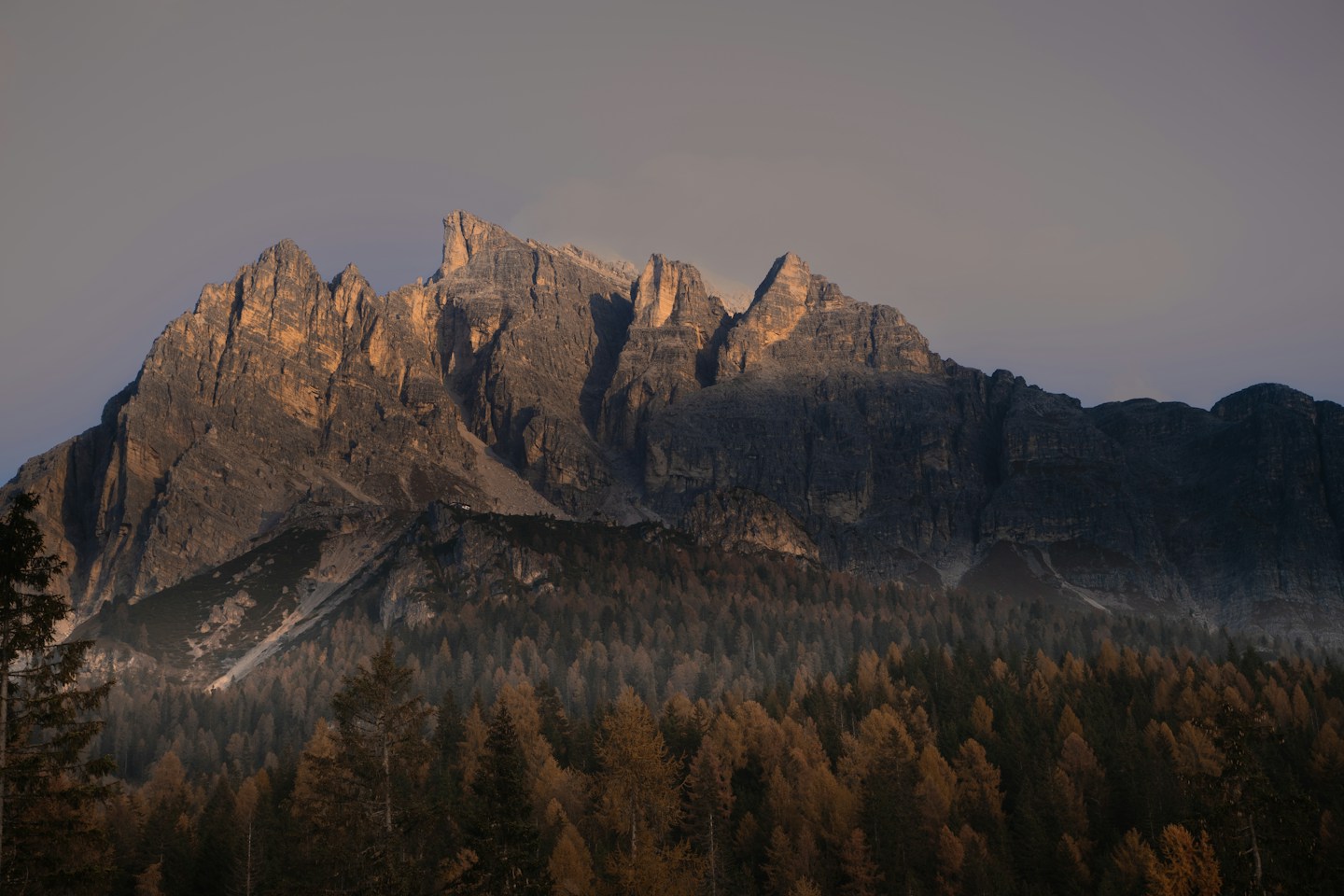
The most useful first decision in the Dolomites is a valley. Before comparing famous peaks or cable-car photographs, choose where you want to wake up, eat and return after walking. The mountain range contains many distinct bases, and a line drawn between celebrated viewpoints can turn a holiday outdoors into a succession of road transfers. Staying with one valley lets the scenery become a setting you gradually understand rather than a background replaced each morning.
Val Gardena offers one way to approach that kind of stay. Its villages, walking connections and mountain access support different levels of ambition within the same broad area. The aim need not be a summit every day. A meadow outing, a lower walk, a craft-focused afternoon and one carefully chosen higher route can reveal more of the landscape than constant movement between locations whose names are familiar chiefly from photographs.
- The mountain range covers several valleys and cannot be treated as one small resort.
- Cable cars do not remove the need to assess the walking route beyond the top station.
- Quiet observation of meadows requires staying on paths and leaving plants undisturbed.
Choose a village before choosing the view
Ortisei, Santa Cristina and Selva are distinct villages within Val Gardena, rather than interchangeable labels for one resort. Ortisei has a lively center and a strong craft association; Selva provides a more immediately mountain-facing setting below the Sella massif. Santa Cristina offers another position within the valley. Think about the practical life around the room: food, the walk to transport and whether there is somewhere pleasant to spend a day without a major excursion.
A hotel description may emphasize access to hiking while leaving the final approach unclear. Examine the actual address, the gradient between room and bus stop, and the walk to the lift you expect to use most often. These details matter after a long descent or when carrying groceries. A slightly less dramatic balcony view may be worth exchanging for an easier daily routine, especially if your group includes children or travelers with different walking abilities.
Place names can appear in more than one language. Val Gardena is also known as Gröden in German and Gherdëina in Ladin. Save exact accommodation and trailhead locations, and compare names carefully when reading maps or transport information. The linguistic landscape is part of the valley's identity, not simply a navigation puzzle. A local collection or conversation about craft can add a cultural dimension to scenery that is too easily described only through its peaks.
Ask what a lift actually delivers
A cable car changes the height at which an outing begins; it does not determine the difficulty of the ground beyond the upper station. A broad path near the building may lead toward narrower, rougher or more exposed terrain. Read the complete route description before buying a ticket for a particular walk. Look for ascent and descent, surface, exposure, navigation demands and the point at which the route can sensibly be shortened.
The return deserves special attention. If the plan depends on descending by lift, verify current operations and leave a generous margin. Walking down is not an automatic substitute for a missed service. The descent may be much longer or more demanding than the intended route above, especially when tired. A mountain outing should remain appropriate without assuming that enthusiasm or a phone map can solve every logistical change.
Lift closures and seasonal schedules also influence accommodation choices. Do not build a whole stay around a service whose operating period you have not confirmed. Ask the relevant operator, then keep a lower-level alternative that you would enjoy in its own right. This makes the valley base resilient. A day without a lift can still include a meaningful walk, a good meal and time to notice the buildings and businesses usually passed on the way uphill.
Alpe di Siusi is a landscape to move through carefully
Alpe di Siusi offers high meadow scenery, but a meadow landscape should not be confused with a uniformly easy walking surface. Routes differ, and reaching a broad open area does not settle the suitability of every path across it. Choose a specific walk according to ability and conditions. Include the distance between arrival point and the actual beginning of the route, which can add more effort than the simplified itinerary suggests.
Stay on established paths and observe agricultural boundaries. Grassland can be habitat, working land and a visitor landscape at the same time. A photograph is no reason to walk through vegetation or move a boundary marker. Looking from the path often improves the sense of scale because it preserves the relationship between meadow, buildings and mountain edges. Bring patience rather than searching for a position that requires leaving the route.
Open ground also exposes walkers to sun, wind and changing weather. Carry suitable layers, water and food even when a meal stop appears on the map. A hut or restaurant is a useful possibility once its operation is confirmed, but it should not be the only thing supporting a safe, comfortable outing. Leave enough flexibility to shorten the route if cloud obscures the view or the group discovers that the terrain feels harder than expected.
Select a walk by its least comfortable section
Distance alone is a weak measure of a mountain day. A shorter route with exposure, loose ground or sustained descent may be less suitable than a longer walk on a broad valley path. Read beyond the headline difficulty label. Ask what the most demanding section requires and whether every member of the group is comfortable with it. Choosing for the strongest walker can leave someone else managing stress for much of the outing.
A route photograph rarely shows the whole experience. It may omit the approach, a steep passage or the return after the scenic point. Use a detailed map and current local information together, and consider a qualified guide when the terrain exceeds your independent experience. Technical routes are a separate activity from ordinary walking. They require appropriate knowledge and arrangements rather than confidence borrowed from having completed a few accessible paths earlier in the week.
Agree on turnaround decisions before leaving. A clear time, deteriorating conditions or a group member losing confidence can each justify shortening the day. The original plan should support that decision instead of making it feel like failure. Remaining in one valley helps: there is less pressure to continue because this is the only chance to see a distant place. The mountain will not become more accessible simply because the itinerary has allocated it a single afternoon.
A valley day can be the best day
Cloud that hides the highest ridges does not erase the valley. A lower walk can bring buildings, water, woodland and the shape of settlement into focus. In Val Gardena, official local route information includes the Luis Trenker Promenade between Ortisei and Santa Cristina. Examine the current route details to decide whether it suits your group, rather than assuming that the word promenade guarantees a particular surface or level of accessibility.
Use a lower outing to look at how villages occupy the terrain. Where do buildings gather, how do roads and paths connect, and which places feel oriented toward daily life rather than a lift departure? Those questions give substance to a day without a summit view. Stop for food while you still have energy to enjoy it, and leave enough time for a shop, workshop or collection that connects the valley's craft traditions with the present.
A cultural afternoon also provides recovery between more demanding walks. Continuous mountain days can accumulate fatigue even when each route seems reasonable in isolation. Giving legs and concentration a lighter period may make the next higher outing more enjoyable. The variety is part of the holiday's quality. A week that includes village life, meadows and changing weather tells a fuller story than one organized exclusively around altitude and distance.
Treat huts and passes as specific arrangements
Mountain huts are not a single standardized service. Their location, operating season and facilities vary, and a marked building does not establish that food, shelter or accommodation will be available when you arrive. Check the particular hut directly if the route depends on it. For an overnight plan, confirm what is included and what equipment or personal items you must bring. A casual lunch stop and a multi-day walking itinerary require different preparation.
Road transfers across the mountains deserve equal precision. A pass-road journey can take longer and demand more attention than its distance suggests. If the purpose is to walk in the area around your base, adding distant photographic stops may reduce the time available outside. Choose one deliberate excursion if it contributes something important, rather than allowing the whole stay to become a loop through places selected mainly because they are widely pictured.
Check current forecasts and local notices before each substantial outing. Conditions in a village do not establish the weather on higher ground, and a pleasant morning does not guarantee the rest of the day. The region's official tourism resources can introduce areas and services; route decisions need the more specific information relevant to the valley, lift or path you will actually use. That distinction keeps broad inspiration from being mistaken for practical confirmation.
Leave with a valley in mind
A rewarding Dolomites stay might include two walks of different character, a meadow day and several shorter local outings from the same room. The exact balance should follow conditions and interests rather than a quota of peaks. Keep the final evening close enough to home that the landscape can be enjoyed without another substantial drive. Familiarity with a particular skyline often becomes more meaningful than one additional distant viewpoint.
The official Dolomites and valley visitor resources are useful starting points, with local operators providing current arrangements. Use them to make the chosen base work well, then let experience refine the plan. The range is too large to collect in one trip. A valley understood through its paths, languages, village streets and changing light is a substantial experience in itself, and a clear foundation for deciding what a future return might explore.
For current destination information, access guidance and local updates, visit the official Dolomites travel resource. Check transport and attraction details directly before booking.
This is a general planning guide, not a live conditions report. Found something that needs updating? Send a correction.