A Highland journey with fewer miles and better stops
The Highlands are easier to appreciate when the route leaves gaps. Choose a small region, learn the rhythm of its roads, and let weather decide which hills and shorelines to explore.
Inside this story
The Highlands become more rewarding when the route leaves gaps. Northern Scotland contains far more than a short road trip can absorb, and the temptation to connect every celebrated glen, loch and coastal viewpoint can turn the journey into a daily mileage exercise. Choose a smaller area with several kinds of outing, then give weather and curiosity room to influence the day. A familiar shoreline seen in changing light can become more memorable than another distant stop reached just before departure.
This is a landscape to understand through roads, settlements and histories as well as mountain shapes. The places between viewpoints are not empty intervals. They contain working communities, land-management responsibilities and the practical systems that allow visitors to travel. A good Highland itinerary makes room for a local collection, a meal and a lower walk, so the trip still has substance when the highest ground disappears into cloud.
- Single-track roads require understanding passing places and local traffic.
- Remote accommodation makes evening food arrangements worth checking.
- Local museums add context to landscapes that otherwise risk becoming anonymous scenery.
Choose a region that makes sense in poor weather
Before selecting accommodation, define the area you genuinely want to explore. A Glen Coe and Lochaber stay has a different shape from time around a northern coastal town or an eastern glen. The Highlands label is too broad to serve as a practical radius for daily excursions. Look at the actual road connections and nearby alternatives, then choose a base from which several worthwhile days are possible without repeatedly driving long distances.
Ask what the trip becomes if mountain views are limited. A useful base might provide a low-level walk, an accessible shoreline, a local cultural visit and somewhere pleasant to eat. Those options should interest you in their own right. A room chosen only for one iconic ridge can leave the stay feeling fragile when conditions do not cooperate. A more varied setting gives the landscape time to change without making each morning a search for another region's forecast.
Several nights in the same place also improve the decision-making. A clearer period can be used for the more exposed outing, while a wet afternoon becomes time for interpretation or rest. If every day requires moving to another room, that flexibility disappears. Reducing the number of bases can therefore increase the range of experiences, because you have more opportunities to match each activity to the conditions it actually needs.
Single-track roads ask for a different rhythm
Single-track roads require patience and an understanding of passing places. Read official driving guidance before setting out if this road type is unfamiliar. The wider spaces exist to allow traffic to pass, not to provide convenient parking for a view. Keep them available and pay attention to other road users, including people who need to make an ordinary working journey rather than enjoy the scenery at a visitor's pace.
The distance shown on a map is only part of the journey. Narrow sections, curves and the need to give way affect time and concentration. A route that looks modest in mileage can still demand substantial driving effort. Build the day around a few selected stops rather than relying on a best-case arrival estimate at every turn. The driver needs room to rest and should not be expected to navigate, search for wildlife and appreciate every panorama simultaneously.
If a desired view has no suitable stopping place, continue until it is possible to stop appropriately or let it remain a passing impression. Do not create an improvised space on soft ground or obstruct an access point. A photograph is not essential to the journey's value. Some of the Highland landscape is best remembered through the experience of moving through it carefully, with attention to the road rather than a camera.
Glen Coe deserves context as well as a viewpoint
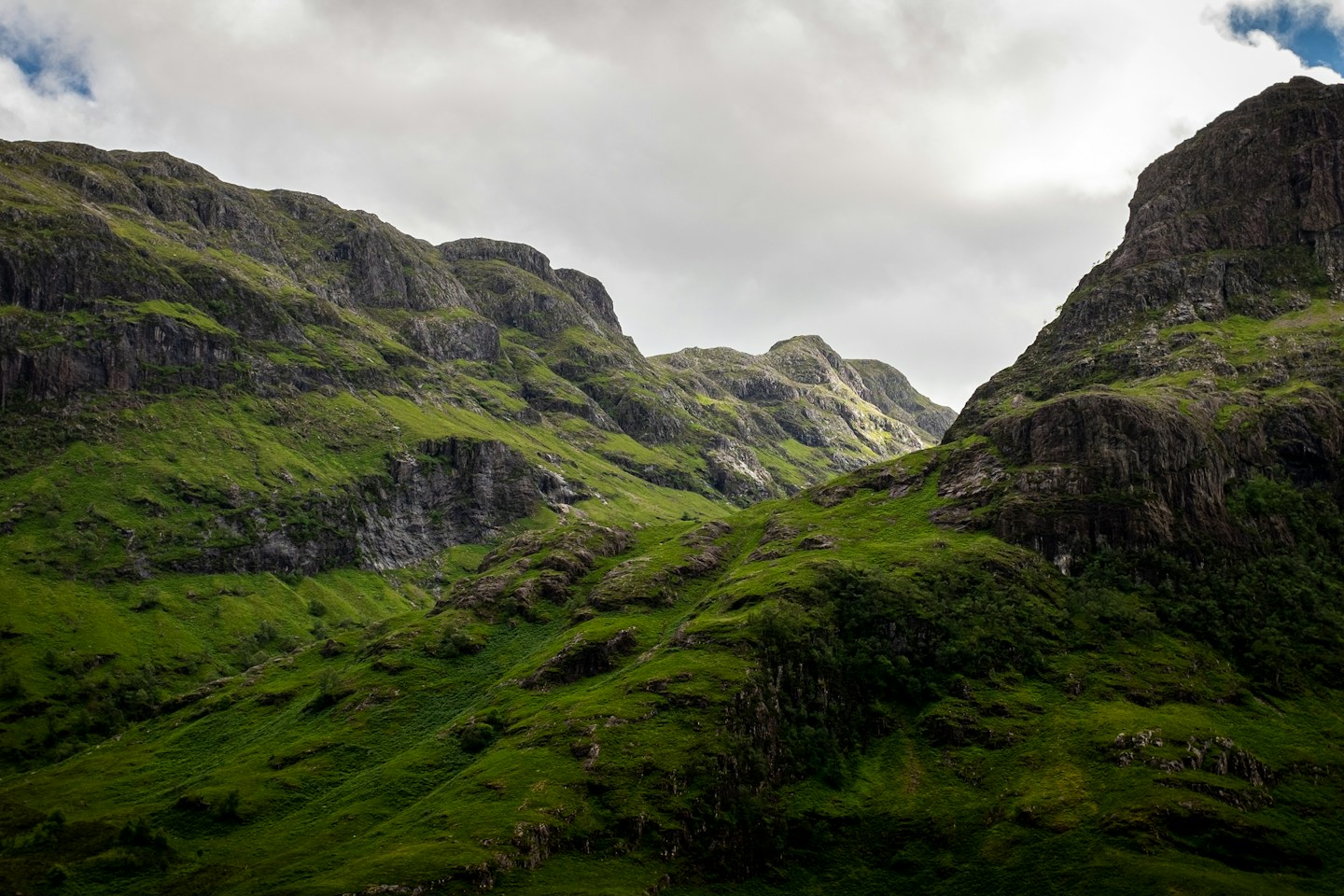
Glen Coe offers a landscape whose scale can be felt from lower ground, without requiring every visitor to climb high. Begin by understanding the area through reliable interpretation. The National Trust for Scotland's visitor center provides a place to connect the surrounding scenery with the histories and conservation work that give it meaning. Check current visitor arrangements if it is central to your plan, and allow enough time to engage rather than treating it only as a facilities stop.
Choose a walk according to its actual terrain. A path beginning near a road can still become steep, rough or exposed, and a popular photograph does not explain the approach. Read a route description, use an appropriate map and assess whether conditions fit the group's ability. A lower outing is a positive choice when it lets you notice the valley's form and return comfortably. It need not be justified as the closest available imitation of a summit day.
Take time to look at relationships: the width of the glen, the way slopes gather around the road and the scale of buildings or trees against the larger ground. These observations can make the landscape specific even when cloud hides the upper ridges. A short route with pauses may reveal more than hurriedly driving from one pull-in to the next. The purpose is to understand the setting, not maximize the number of positions from which it has been photographed.
A loch-side stop needs an actual place to stop
Lochs can seem to invite spontaneous pauses, but safe and legal access matters. Choose a proper parking area and a suitable route to the water rather than assuming every verge offers a reasonable approach. Moving traffic, fences, steep banks or wet ground can separate the view from comfortable access. If the intended location is busy, use another appropriate place instead of creating an obstruction because the stop was marked as essential.
Once you have arrived somewhere suitable, remain long enough for the setting to emerge. Wind changes the surface; passing cloud alters the apparent depth of the surrounding slopes. Look away from the most obvious composition and notice smaller details at the shore. There is no need to move again simply because the photograph has been taken. Time is often what turns an attractive stop into an individual memory of the journey.
Water activities are separate decisions from walking nearby. Do not infer suitable conditions from a calm-looking surface or an inviting image. Seek current local advice and appropriate arrangements for the activity you intend. The same restraint applies to shoreline routes: a line visible along the water is not automatically a practical path. Choose a known, suitable approach and preserve an easy return rather than extending the outing through uncertain ground.
Access is a shared responsibility
Scotland's outdoor access framework depends on responsible behavior. Read the Scottish Outdoor Access Code for the activities and places relevant to your trip, including how to behave around homes, farms, livestock and land-management work. Broad access should not be interpreted as permission to ignore local needs or current signs. A considerate route keeps enough distance from private space and avoids disrupting the ordinary work that continues around a visitor's walk.
Dogs require particular attention where livestock or wildlife is present. Follow the Code and local instructions rather than assuming the same arrangement applies everywhere. Leave gates as indicated and do not use fields or tracks as convenient parking extensions. The landscape's apparent openness can conceal specific responsibilities. Looking carefully at signs and the use of land is part of understanding the place, not a bureaucratic interruption to the experience.
Take all litter away and avoid leaving traces of a meal or overnight stop. A remote-looking setting does not have an invisible service collecting what visitors leave behind. Plan facilities and waste arrangements before longer drives, especially if traveling in a campervan. The practical needs of the group should be met through suitable places and services rather than transferred to a roadside verge or an accommodating small community without asking.
Make evenings work before driving away
Remote accommodation makes dinner worth discussing in advance. Find out whether food is available on site, where the nearest suitable alternative lies and whether you need to book or arrive by a particular time. A day that ends with a lengthy unexpected food journey can undo the benefit of a quiet base. If self-catering, buy supplies while they are conveniently available rather than assuming the last village on the route will provide everything needed.
Fuel and other essential stops belong in the same plan. Avoid reaching a remote stretch dependent on a single unverified service. Keep the final driving period manageable and allow an earlier return after a demanding walk. An evening near the accommodation can be part of the Highland experience: looking at changing light, eating comfortably or reading about the area you have just traveled through. It does not need another major scenic expedition to feel worthwhile.
Midges can affect outdoor pauses in some seasons and conditions. Obtain practical local advice and bring suitable protection when relevant, but do not let the possibility determine the whole visit. The useful response is to keep options: a shorter pause, an indoor meal or a change in timing. A flexible evening plan is easier to enjoy than one that depends on sitting motionless outdoors for a long period regardless of comfort.
Let local interpretation give the scenery names
A local museum or collection can explain work, settlement, language and the changing relationship between communities and land. Choose one with a subject that genuinely interests you and give it a proper place in the day. The Highlands are not a single anonymous wilderness, and the same hillside can become more meaningful when connected to human histories. Look for interpretation grounded in local knowledge instead of relying only on broad romantic images.
VisitScotland can help establish the region and its variety, while local institutions, land managers and operators provide the specific information needed for the chosen outings. Keep the final route modest enough to respond. A low walk, a glen seen through cloud, a thoughtful collection and a few well-chosen shorelines can make a complete journey. The miles omitted are what create the time to understand the miles you do travel.
For current destination information, access guidance and local updates, visit the official Scottish Highlands travel resource. Check transport and attraction details directly before booking.
This is a general planning guide, not a live conditions report. Found something that needs updating? Send a correction.