Aoraki Mackenzie: mountains by day, dark skies by night
The Mackenzie landscape asks for attention at two different scales: broad mountain valleys in daylight and the sky after dark. Balance those experiences with conservative walking plans and enough rest.
Inside this story
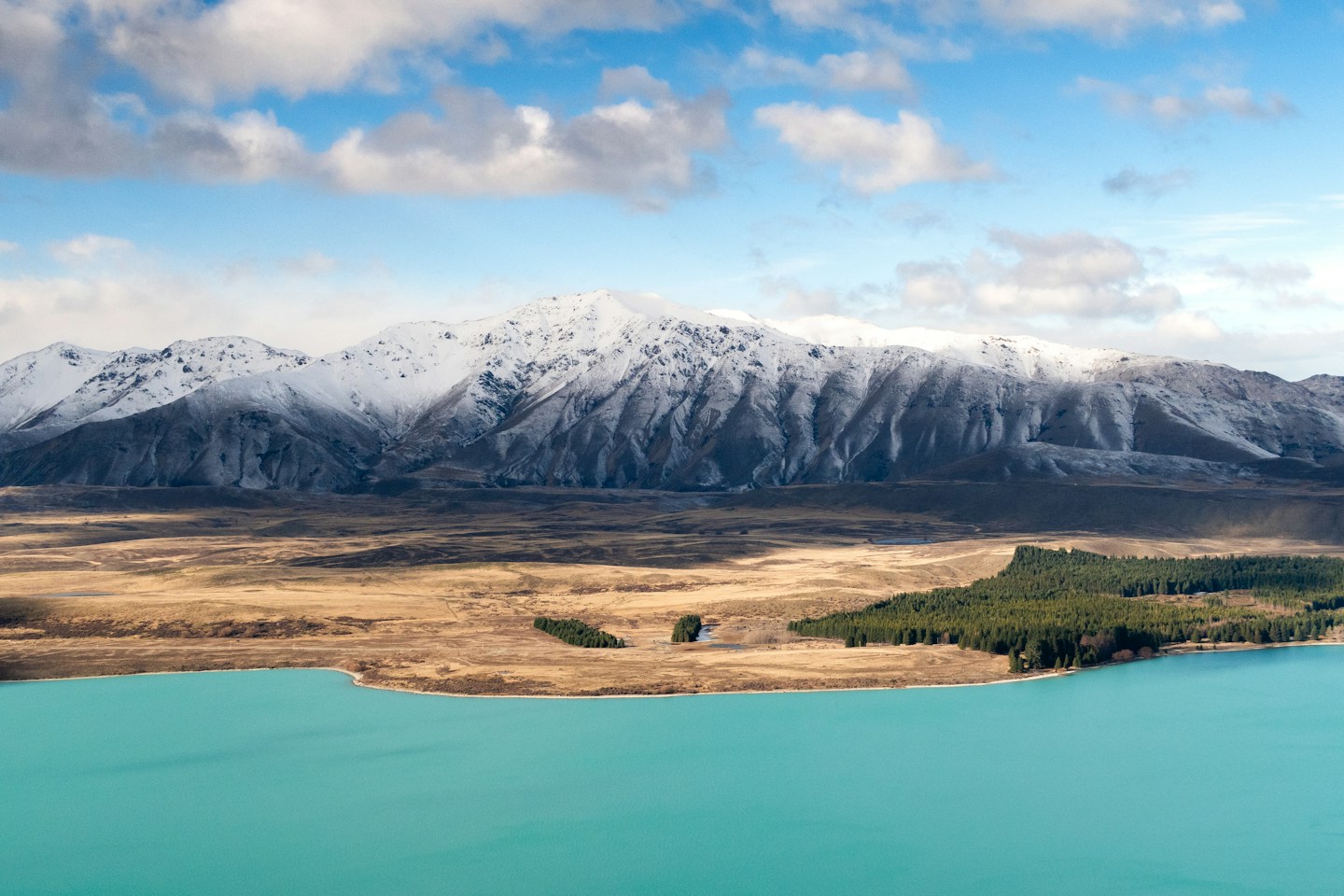
Aoraki Mackenzie offers two experiences that compete quietly for the same hours of rest. By day, broad valleys and high mountains invite walking; after dark, the sky invites you to stay outside long after a normal bedtime. Trying to maximize both every day can produce a surprisingly tired holiday. A better visit gives daylight outings and night viewing different roles, with weather and sleep allowed to influence their order. The region rewards staying with a landscape rather than driving continuously through it. A mountain partly hidden by cloud, a lake under changing light and a clear interval after dinner can all become substantial experiences without being combined into one exhaustive schedule.
- Aoraki/Mount Cook village and Lake Tekapo are distinct bases within the wider region.
- A late night should be reflected in the following morning’s driving plan.
- Warm layers can matter even after a mild afternoon in the valley.
Two bases, two different mornings
Lake Tekapo and Aoraki/Mount Cook village are distinct bases within the wider region. Choosing between them is not simply a matter of which photograph you prefer. Consider the walks, food arrangements, road journeys and evening activities you actually intend to undertake. A lodging convenient for a late sky experience may not be equally convenient for an early mountain start. Plot a typical day from breakfast to bedtime before deciding how many nights belong in each place.
A split stay can make sense when both areas are central interests, but changing rooms every night consumes time and fragments the experience. It can also create pressure to complete a weather-dependent activity on the only available evening. Fewer accommodation changes give the forecast room to influence the plan. If traveling without a private vehicle, check the complete connection to the property rather than merely the existence of transport into the region. Drivers should be equally attentive to the last stage: a beautiful isolated room may mean extra travel for every meal. A base that supports comfortable ordinary routines leaves more energy for the exceptional setting outside it.
Before settling on a property, compare what is visible from its public surroundings with what still requires a road journey. A room advertised through a distant mountain image may offer an excellent stay, but it should not create an expectation that every celebrated view is outside the door. Ask about local walking access and evening lighting if independent sky observation is important. Consider whether the accommodation supports a quiet return after dark without disturbing other guests. These questions connect the daytime and nighttime purposes of the visit and help turn an attractive booking into a base that works under the hours you actually intend to keep.
Read a valley track as a route, not a reputation
A well-known walking name can create the impression of an outing that is always open and appropriate. In an Alpine environment, its current condition matters more than its popularity. Consult the Department of Conservation before setting out, including alerts, route descriptions and equipment guidance. Weather events can affect tracks, bridges and access. Check the exact outing you intend to do instead of assuming that a general report about the village describes the terrain farther up the valley.
Match the walk to the group's experience and the day rather than to the most ambitious person. Discuss return points before leaving and carry what the route requires even if the start feels mild. An apparently easy approach can still include rough surfaces, exposure or a long distance back once someone becomes tired. Keep enough time for looking as well as moving. Mountain valleys change with cloud and perspective, and stopping to understand those relationships is part of the outing. A shorter walk completed attentively can give a stronger sense of place than a longer one spent checking the time. The objective is to return with enough reserve to enjoy the evening, whether it is spent outside or asleep.
Kea Point is one named option to research from Aoraki/Mount Cook village. DOC’s description connects the route with a landscape altered by a stream in 1913, a reminder that a valley view can contain a specific history of water and change. Read the current route page, doc.govt.nz, rather than assuming that its familiar name settles suitability. A route chosen with that context can support looking at the landforms as well as the mountains, without requiring the group to seek a more demanding ascent for the sake of a panoramic photograph.
Water color is not an invitation
Glacial lakes and rivers can appear vivid and inviting, but their appearance conceals temperature, depth, current and unstable surroundings. Treat them as landscapes to observe from authorized places unless clear local guidance supports a specific activity. Do not improvise a shoreline descent or wade across a stream to reach a photographic angle. River conditions can vary, and the consequence of a misjudgment is not reduced because the view looks calm.
The same caution applies to the ground near the water. A viewpoint reached from an established path differs from an unmarked scramble toward a closer edge. Pay attention to signs and barriers and avoid following somebody else simply because they seem confident. For families, choose stopping places where everyone can look without needing continuous intervention near a hazard. There are many ways to attend to the water without approaching it: study how cloud reflections interrupt its color, how sediment affects the shoreline or how the surrounding mountains change its apparent scale. These are observations that a rushed dip or risky photograph can prevent. The landscape becomes more interesting when its processes, rather than its color alone, shape the visit.
A dark-sky evening begins before sunset
Good night viewing depends on more than the absence of city lights. Cloud, moonlight, the viewing location and your own comfort all influence what you experience. Decide whether you want a guided introduction, independent observation or photography, since these create different needs. A guided session can help someone unfamiliar with the sky understand what they are seeing, while independent viewing demands particular care in choosing a lawful, safe stopping place.
Identify that place in daylight. Understand the walking surface, nearby traffic, permitted access and the route back. Do not stop on a road shoulder simply because the horizon looks open. Prepare warm layers even after a pleasant afternoon; standing still in the dark feels different from walking in sunlight. Bring appropriate lighting and manage it considerately around other viewers. Avoid shining a bright beam toward faces or across another person's setup. Put practical items where they can be found without repeatedly illuminating everything. These small preparations allow attention to shift upward. A comfortable, clearly understood viewing site is more useful than a theoretically darker place where you spend the evening worrying about footing, access or the drive home.
Learn enough sky to replace the checklist
A first stargazing evening can become an attempt to identify as many objects as possible. Slow the task down. Let your eyes adjust, notice the broad pattern of light and darkness and ask a guide to explain a few relationships clearly. Understanding one part of the sky can be more memorable than hearing a rapid sequence of names. Visitors arriving from another hemisphere may find even familiar ideas about orientation less intuitive, which makes patient explanation especially valuable.
Photographers should distinguish seeing from capturing. A camera may record detail or color differently from the eye, and an image shown in a brochure is not a promise about the naked-eye view. Learn the necessary controls before the outing so that the night does not disappear into menus. Keep equipment within a safe footprint and avoid spreading bags across a shared path. Allow some time when the camera is put away altogether. Night observation can be a quietly collective activity: people speaking softly, waiting through passing cloud and comparing what they notice. Its reward need not be a technically successful exposure. Sometimes the most lasting impression is simply recognizing how much of the sky ordinary urban lighting usually hides.
Budget sleep as carefully as daylight
A late night alters the following day, particularly when driving is involved. Avoid pairing the trip's most demanding walk with its latest viewing session and an early departure immediately afterward. A recovery morning is not wasted time. It can hold breakfast, a short local walk, a visit for interpretation or an unhurried return to a lake viewpoint. The region's scale remains available without turning every day into an endurance sequence.
This is another reason to keep several nights in one base. A clear evening can be used without sacrificing a distant transfer the next morning, while a cloudy evening does not require desperate driving to another location. Discuss expectations within the group. Some people will be happy with a brief look after dinner; others may want hours for photography. Arrange those differences without obliging an exhausted driver to remain responsible for everyone's return. If transport forms part of a booked activity, confirm where it ends and how you reach the accommodation afterward. The practical conclusion of a sky experience matters as much as the start. Rest is what makes the next day's judgment and attention possible.
Stay interested when the summits disappear
Mountain views are never guaranteed, and cloud can expose how heavily an itinerary depends on one image. Prepare alternatives that suit the conditions rather than merely substituting another exposed viewpoint. Local interpretation, a short sheltered outing or a day close to the accommodation can help connect the region's human and natural stories. Ask what is appropriate now, especially after adverse weather. A closed track is not an invitation to find an unofficial parallel route.
Use the regional resource at mackenzienz.com for orientation, then turn to the responsible land manager and activity operator for current walking and access information. Leave the final day some breathing room if an onward connection is important. The broader landscape often becomes more affecting through repetition: a familiar ridge briefly emerging, the color of a lake changing or a star appearing through a gap after an otherwise cloudy evening. None of these moments can be scheduled precisely. What can be arranged is enough time, rest and flexibility to notice them. That is the particular strength of a Mackenzie stay shaped around both mountains and darkness: it teaches you to attend to conditions rather than continually insist on the same view.
A few practical questions
Do mountain walks and stargazing belong on the same day?
They can, if the walk is suitable and the evening modest. Avoid combining strenuous activity, a very late night and an early drive. Plan recovery time deliberately.
Will a dark-sky location guarantee a clear view?
No. Cloud and other conditions still matter. Several nights provide flexibility, while a well-chosen daytime program keeps the trip rewarding regardless of the sky.
For current destination information, access guidance and local updates, visit the official Aoraki Mackenzie travel resource. Check transport and attraction details directly before booking.
This is a general planning guide, not a live conditions report. Found something that needs updating? Send a correction.