South Iceland without a race to the next waterfall
South Iceland’s celebrated stops make it tempting to keep driving. A better plan gives each landscape time and accepts that wind, road conditions and daylight can change the route.
Inside this story
South Iceland invites a misleading kind of arithmetic: add a waterfall, a beach and a glacier view, then assume the day is complete because each stop is close to the road. What that calculation leaves out is the landscape itself. Wind can slow a drive, spray can turn a short path slippery and a beautiful shoreline can require a much more cautious visit than a long inland walk. A good south-coast journey therefore begins with fewer promises. Choose an achievable stretch, give the driving its own attention and regard the freedom to leave a stop as part of the itinerary.
- Reykjavík and the south-coast villages serve different parts of a road itinerary.
- Road and weather information should be checked before each driving day.
- Geothermal bathing venues have their own booking and hygiene rules.
Plan a road day before planning photographs
The main road provides continuity, but it does not make the south coast a single small sightseeing district. Reykjavík and the coastal villages serve different parts of a journey, and the right overnight stop depends on what comes before and after it. Plot the return as carefully as the outward drive. An attractive distant destination becomes a poor choice if reaching it leaves a long evening journey after several tiring stops. Accommodation farther along the coast can help, but only if the day's route still has generous margins.
Make a realistic allowance for collecting a vehicle, buying supplies and learning unfamiliar controls before the first excursion. Include fuel and meal stops in the route rather than assuming that both will appear exactly when needed. At a scenic stop, only use legal parking and a proper pedestrian approach. The temptation to stop briefly on the road is particularly unhelpful in a landscape that already demands attention from other drivers. A journey organized around two substantial visits can feel much richer than one with six rushed departures. It also allows the driver to experience the places rather than remain mentally occupied with how far there is still to go.
For a group sharing driving, agree on responsibilities before departure and make sure every intended driver is covered by the rental arrangements. The passenger can handle saved route information and help identify the correct parking approach, leaving the driver free to concentrate. Keep loose equipment contained, particularly when wet coats and camera bags accumulate after several stops. A tidy vehicle is a small but useful contribution to a demanding road day. At each departure, take a moment to settle everyone and confirm the next destination rather than pulling away while the group is still debating which waterfall comes next.
Let the morning information change the map
Weather is a planning input in Iceland, not a decorative note attached to an otherwise fixed schedule. Consult current official weather, road and travel-safety information before each driving day, and understand any warning that applies to the route and vehicle. Ask the rental company about relevant vehicle restrictions before leaving. A road closure or severe warning is a reason to rearrange the journey; a reservation at the other end does not improve conditions in between.
This is especially important when daylight is short. The distance comfortable in a bright summer day can become an exhausting winter proposition, even before allowing for ice or reduced visibility. Build the itinerary around useful daylight for both the visit and the driving, with space to stop early. Conditions can differ along the same route, so a comfortable departure from town is not evidence that the entire day will be similar. Keep an alternative overnight or return strategy in mind without treating it as an invitation to improvise through a warning. The purpose of checking information is to make a decision while options remain available, rather than discover a problem after all flexibility has gone.
Waterfalls ask you to look at the ground
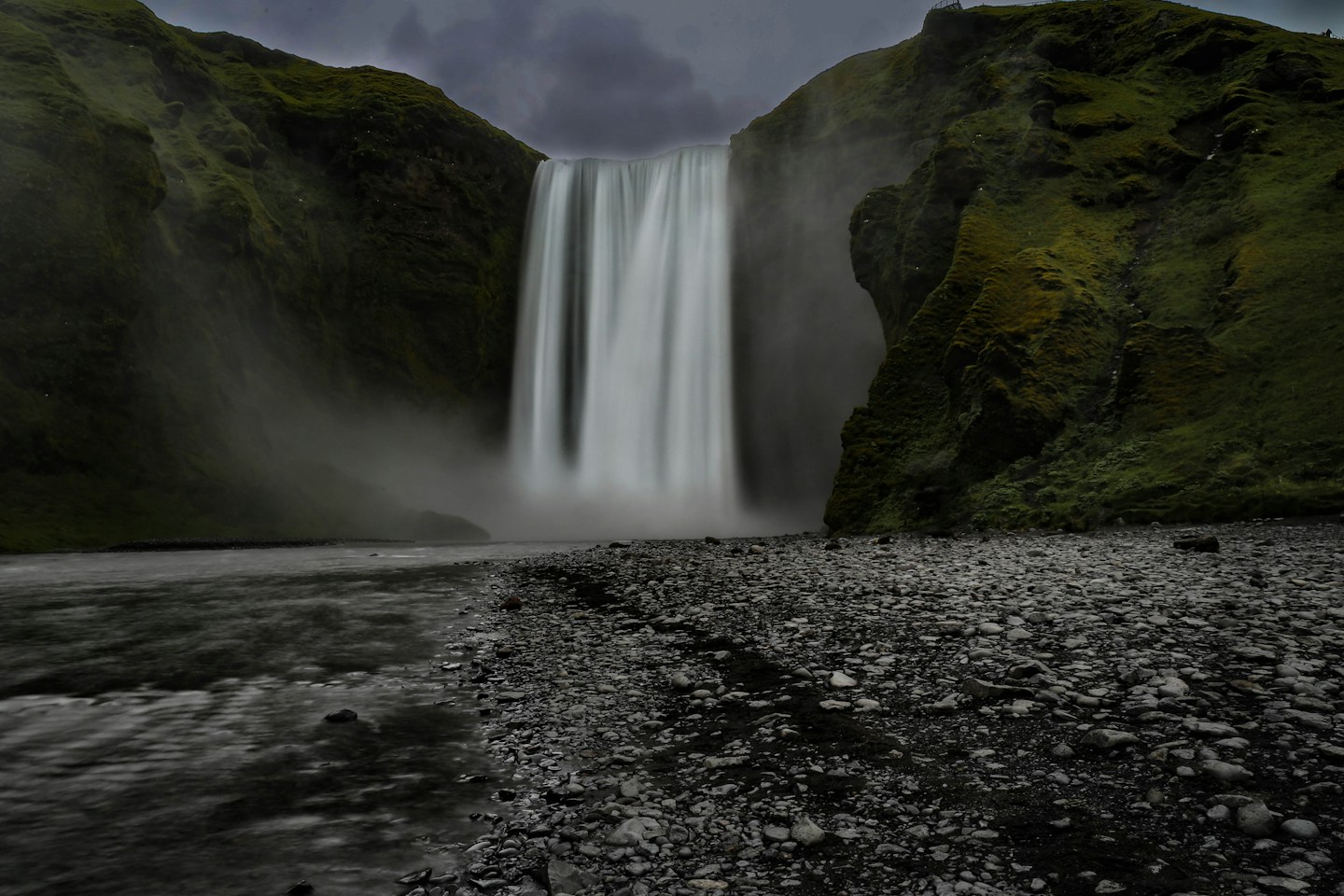
Seljalandsfoss and Skógafoss illustrate why two waterfalls should remain two assessed visits. Seljalandsfoss is associated with a path behind the falling water; Skógafoss offers a different encounter with a broad curtain and its spray. Neither experience should be assumed available or suitable under every condition. The regional introduction places both on the wider south-coast route, together with Reynisfjara near Vík: south.is. Use those names to organize geography, not as a promise that all three must fit the same afternoon. Allow the actual ground, warnings and visibility at each place to determine the form and length of the visit.
At a waterfall, the immediate visual drama draws attention upward and outward. The practical decision lies underfoot. Spray can soak paving, rock and steps, while cold conditions can introduce ice that is difficult to judge from a photograph. Read the signs at the entrance and inspect the route as you go. A path visible beyond a barrier is not an invitation to continue, and yesterday's description may no longer match today's conditions.
Give the stop enough time to use facilities, put on suitable clothing and decide how far the group should go. Keep cameras and phones secondary while negotiating slippery ground. Where a route offers a closer approach or passage near falling water, participation should remain optional; the more distant view can be the right experience for somebody with uncertain balance or unsuitable footwear. Water-resistant outerwear is useful, but it does not eliminate footing or exposure concerns. After returning to the vehicle, allow time to manage wet clothing before driving. That small pause is part of the visit. It prevents the entire day from becoming a succession of damp, hurried transitions and makes the next decision easier to assess calmly.
A black beach is an ocean shore first
Dark sand and dramatic rock formations have made the south coast's beaches familiar through images, but familiarity does not make them predictable. Strong surf and sudden waves can reach farther up a beach than visitors expect. Follow local warnings and barriers, remain well back from the water and never let a photograph determine how close to approach. Keep children close and do not position a group with its back to the sea while someone composes a picture.
The shoreline is best understood from a safe distance, where changes in light, the movement of water and the scale of the land remain visible. A beach visit does not need to include walking to the wet edge, climbing rocks or examining a sea cave. If conditions or official advice make the stop unsuitable, choose another place. There is no benefit in converting a canceled beach walk into a different exposed coastal stop simply to preserve the category on the itinerary. An indoor meal, a village walk or an early arrival at the accommodation can provide a meaningful change of pace. The coast continues to exist beyond the particular image you hoped to bring home, and responsible distance is part of seeing it clearly.
Keep glacier scenery separate from glacier access
A view of ice from an established public area and an excursion onto glacier terrain are different activities. The first may fit a road journey; the second requires appropriate professional arrangements and current assessment. Do not follow other people's tracks onto ice, approach an unstable edge or assume that a short distance makes unassessed terrain acceptable. A guide-led activity should be chosen for the group's ability, the operator's requirements and the day's conditions, with a clear understanding of equipment and cancellation arrangements.
Even a viewpoint outing needs its own route check. Ground near glaciers and glacial waterways can be uneven or change after weather events, and attractive water is not an invitation to swim or wade. Stick to authorized approaches and allow enough time to return without hurrying. If a glacier activity is a central interest, give it a day with fewer competing commitments. Trying to place it between distant waterfalls can encourage fatigue and inflexible thinking. A trip also benefits from learning something about the landscape through interpretation rather than seeking only proximity. The relationship between ice, sediment, rivers and the coast can make a distant view more informative than a hurried close encounter.
Protect the ground between the landmarks
The scenery alongside the road is part of the experience, but much of it is poorly suited to casual wandering. Delicate vegetation can be damaged by repeated trampling, and a faint line through it may represent previous harm rather than a legitimate path. Stay on marked routes and use established viewpoints. Do not drive off-road to gain a quieter angle or follow a vehicle track without understanding whether it is an authorized road.
A responsible stop also requires mundane facilities. Carry a rubbish bag, know where toilets are available and use designated areas for resting. A rural view is somebody's landscape of work and stewardship as well as the visitor's subject. Respect fences, livestock and access notices, and do not enter private ground because it looks empty. The same restraint improves the holiday itself. When you stop trying to find an untouched-looking photograph at every bend, there is more time to notice broader changes: agricultural land giving way to exposed terrain, low cloud altering the apparent height of cliffs, or a stretch of sunlight briefly opening across the plain. These observations require attention more than access.
Make a village evening part of the destination
A coastal village base can change the character of the journey. Instead of returning immediately toward Reykjavík, you can eat, dry clothing and make the next day's decisions without another long transfer. Choose accommodation by its actual relationship to food, supplies and your onward route. A remote property may offer quiet, but it also makes evening arrangements more important. Confirm them before arrival rather than assuming that a nearby-looking settlement has a convenient late meal.
Geothermal bathing can provide a different kind of outing, provided you check the venue's own access, booking and hygiene requirements. Allow it enough time to be restorative rather than using it as one more deadline. Begin broader planning with visiticeland.com and follow its links to current official services where needed. On the final day, resist adding the missed attraction if it compromises the airport or city connection. A successful south-coast trip is not a sequence in which every intended photograph was made. It is a journey whose distances, conditions and rest periods allowed you to remain alert enough to understand what you were seeing, and flexible enough to stop when the landscape required it.
A few practical questions
How many major stops make a comfortable driving day?
There is no universal number. Two substantial visits may be enough when road distance, daylight and weather are included. Count the whole day, including meals, wet clothing, facilities and the return journey.
Can famous places be visited without entering difficult terrain?
Often an established viewpoint offers an experience in its own right. Check current access and conditions; proximity to a road never guarantees an easy or suitable path.
For current destination information, access guidance and local updates, visit the official Iceland travel resource. Check transport and attraction details directly before booking.
This is a general planning guide, not a live conditions report. Found something that needs updating? Send a correction.